
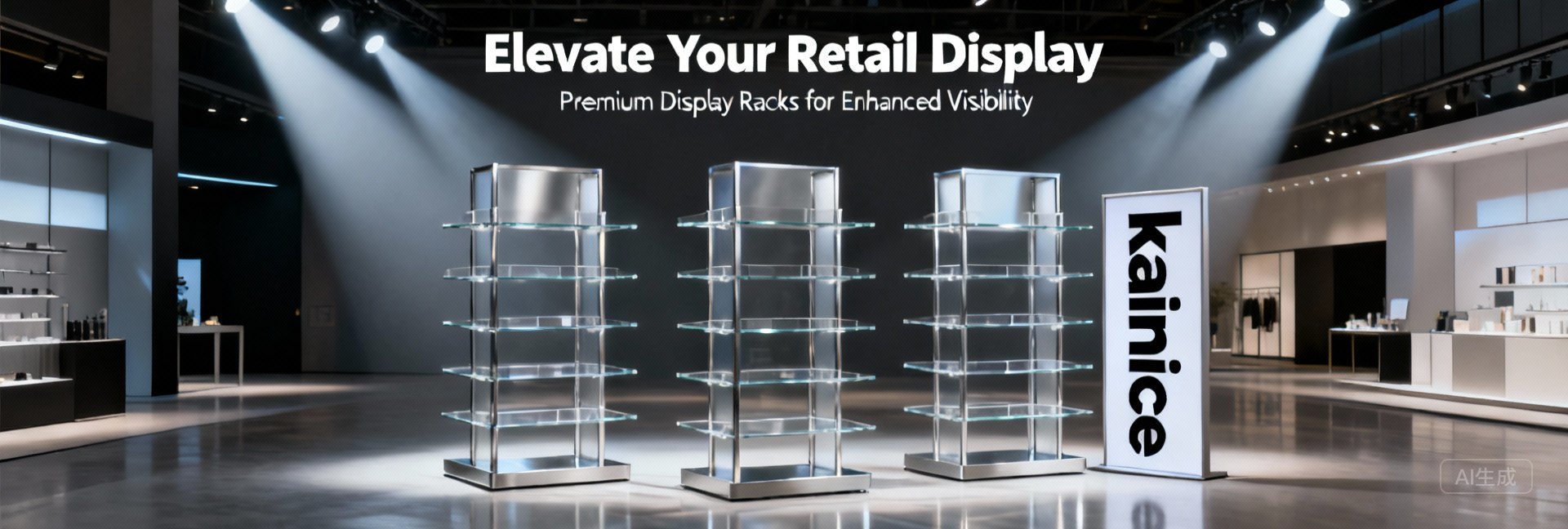
In high-traffic retail environments and modern commercial stores, selecting a heavy-duty, precision-crafted Boutique Garment Display Equipment directly impacts merchandise visibility and brand authority.
The Reality of Retail Fixture Engineering
I have spent fifteen years on the factory floor, and if there is one thing I’ve learned, it’s that retail floor space is a battlefield. Your garment displays are not just furniture; they are revenue-generating assets that take a beating from heavy inventory, aggressive floor staff, and thousands of customers brushing past them every single day. If you are buying display racks based on a pretty picture in a catalog, you are setting yourself up for a nightmare. We see it all the time at kndisplay: clients coming to us with a pile of twisted metal, looking for a fix because they chose the "budget-friendly" option that couldn't handle the weight of a winter coat collection.Boutique Garment Display Equipment Material Selection: Avoiding Weakness and Structural Sagging
When we talk about boutique garment display equipment, material selection is where most manufacturers hide their sins. Many factories use recycled, low-grade alloys to cut costs. They look shiny on day one, but they lack the tensile strength to hold up under stress. I remember a specific project for a high-end denim boutique; they sourced "stainless steel" racks from an overseas supplier that were actually thin-walled, chrome-plated carbon steel. Within three months, the constant load of heavy denim caused the horizontal bars to sag by nearly 15mm. At kndisplay, we enforce a strict policy: we only use 304-grade stainless steel with a minimum wall thickness of 1.5mm for main support uprights. If you are using anything thinner than 18-gauge (approximately 1.2mm) for a hanging rail, you are flirting with disaster. Ever wonder why discount display racks start wobbling after two weeks? It’s because the metal gauge is insufficient to handle the torque. When we design a rack, we run a load test of 50kg (110lbs) per tier. If it deflects more than 2mm under that load, the design goes back to the drawing board. Don't let a supplier talk you into 22-gauge steel just to save a few pennies on shipping weight. It’s a false economy that will cost you your inventory and your store's professional reputation.Hot-Bending vs Cold-Forming in Boutique Garment Display Equipment Manufacturing
Fabrication methods determine the lifespan of your fixtures. People often ask me why some racks develop stress cracks at the joints while others last for a decade. The answer usually lies in how the metal was formed. Cold-forming, while faster and cheaper, creates internal stress in the molecular structure of the metal. If you push a piece of steel into a tight radius without heat, you are asking for micro-fractures. Over time, as the rack vibrates from customers pulling hangers, those micro-fractures expand. At kndisplay, we prefer precision hot-bending for high-load corners. By heating the material to a precise temperature, we allow the metal to flow into the desired shape without compromising its crystalline structure. We maintain a tolerance of ±0.2mm on all bends. If a manufacturer is cold-forming heavy-duty racks, they are prioritizing their profit margin over your store's safety. Is saving a few dollars on production really worth a $10,000 product spill when a rack collapses? I’ve seen it happen. It’s messy, it’s dangerous, and it’s entirely preventable with the right engineering approach.Optimizing Load Capacity and Laser Tolerances for Boutique Garment Display Equipment
The difference between a "wobbly" rack and a rock-solid display is found in the laser-cutting tolerances. We use high-precision CNC fiber lasers that cut to a tolerance of ±0.1mm. Why does this matter? Because when you are assembling modular boutique equipment, the tightness of the joints determines the overall rigidity of the unit. If the holes are even 0.5mm off, the bolts won't sit flush, and you’ll have a "rattle" that signals low quality to your customers. We also pay close attention to the powder-coating process. You want a finish that doesn't chip the moment a hanger hits it. We specify a powder coat micron rating of 60-80μm. Anything less, and you’re looking at exposed metal within six months. We also implement a rigorous prep phase—sandblasting the metal to ensure the powder bonds to the steel, not just the oxidation. If you’re sourcing fixtures, ask your manufacturer about their powder coating thickness and their laser tolerances. If they can’t give you a number, they aren't engineers—they’re just assemblers.Reducing Freight Damage and Maintenance Costs for Boutique Garment Display Equipment
Freight damage is the silent killer of retail budgets. I’ve seen beautiful, expensive fixtures arrive at a job site looking like they were dragged behind the truck. This is almost always a failure of packaging, not the carrier. At kndisplay, we don't just throw parts in a box. We use custom-cut pearl foam inserts that lock each component into place, ensuring that even if the box is dropped from a height of one meter, the finish remains pristine. For the store manager, maintenance is just as critical. I recommend a "Quarterly Integrity Check." Take a torque wrench to every bolt on your displays every three months. Vibration from HVAC systems and floor traffic will loosen hardware over time. A simple five-minute check can prevent a rack from leaning or shifting. If you notice a rack starting to lean, do not just tighten the bolt. Check the base plate for warping. If the base plate is flexing, you have exceeded the structural capacity of the fixture, and no amount of tightening will fix a metal fatigue issue. Replace the component immediately. Your floor traffic is your lifeblood; don't let shoddy, neglected equipment become an obstacle that drives customers away. Treat your fixtures like the high-end engineering products they are, and they will support your business for years to come.
[Figure] Boutique Garment Display Equipment commercial showroom deployment & structural details (Fabrication: kndisplay)
Scene: High-end commercial boutique showroom featuring custom heavy-duty Boutique Garment Display Equipment (Clothing & Garment Display Racks) with precision diamond-polished finish, 3000K warm directional spotlights, neatly organized merchandise, and 8k architectural photography.
💡 Factory Veteran Tip:
Every retail chain and storefront layout has distinct footprint constraints and load-bearing requirements. Before signing off on bulk Boutique Garment Display Equipment manufacturing orders, always demand certified load analysis drawings and a physical sample evaluation. At kndisplay, our engineering team provides free prototype evaluations and B2B fixture consulting for brands worldwide.