
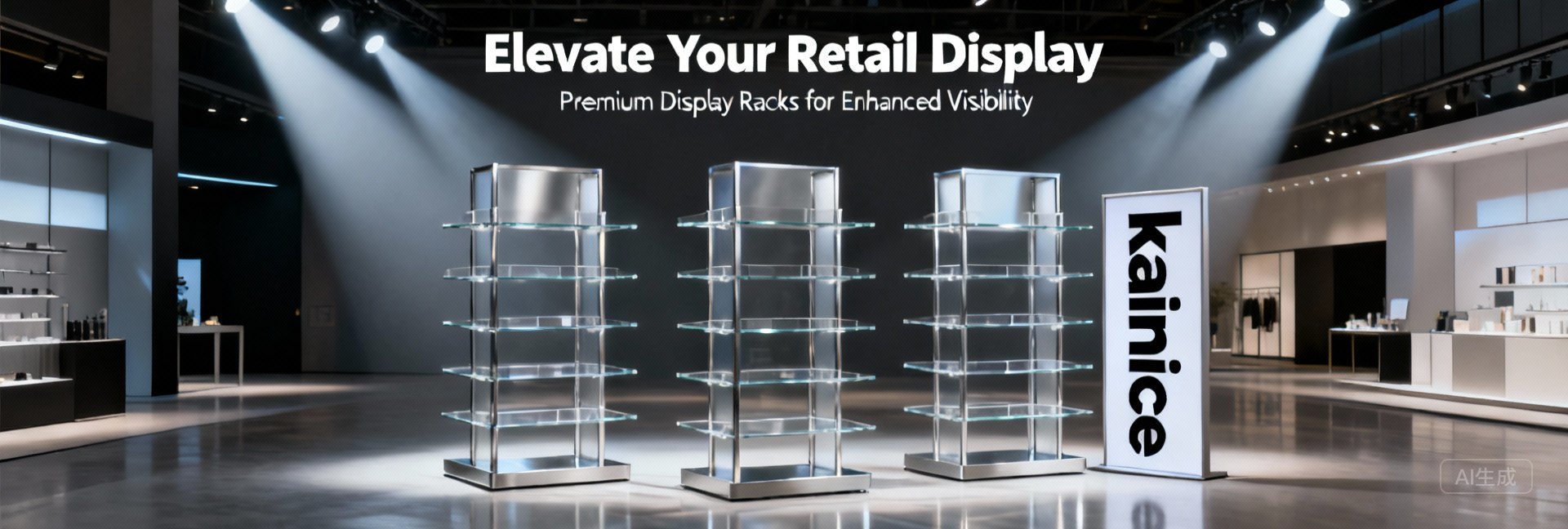
In high-traffic retail environments and modern commercial stores, selecting a heavy-duty, precision-crafted Wood and Metal Clothing Rack directly impacts merchandise visibility and brand authority.
The Engineering Truth About Retail Fixtures
I’ve been standing on the factory floor for 15 years, and I’ve seen more "bargain" retail fixtures end up in a dumpster than I care to count. When you look at a wood and metal clothing rack, most people see a piece of furniture. I see a series of failure points waiting to happen. If you aren't paying attention to the metallurgy and the moisture content, you’re just renting a disaster that will eventually collapse under the weight of your inventory. At kndisplay, we don't just build racks; we engineer load-bearing infrastructure. Let’s get into the weeds of how these things should actually be built.Wood and Metal Clothing Rack Engineering: Managing Laser Tolerances and Structural Sagging
Here’s the thing about laser cutting: if your tolerance is off by even 0.5mm, your frame is going to rack. I once had a client come to me with a massive headache. They had sourced 500 units from a supplier who bragged about speed. The problem? The laser cutting was sloppy, leading to gaps in the joints. When they hung heavy winter coats, the entire structure developed a permanent lean. That 0.5mm error at the base amplified to a 20mm shift at the top rail. We address this at kndisplay by enforcing a strict ±0.2mm tolerance on all CNC laser-cut profiles. If the metal doesn't seat perfectly into the notched wood grain, the weld-joint stress distribution becomes uneven. A weld is only as strong as the surface area it bonds to. If you’re just tack-welding a hollow tube to a flat piece of steel without a proper flush fit, you’re asking for a fatigue fracture. For long-span racks, I always insist on a center support gusset. If your rack spans over 1200mm, it will bow. It’s physics, not opinion. We use 18-gauge cold-rolled steel for the hanging rails, and we refuse to go thinner. Anything higher than 18-gauge starts to "oil can" or twist when you load it with denim or leather jackets.Selecting Sustainable Materials for a High-Capacity Wood and Metal Clothing Rack
Choosing between hardwood and MDF is a constant battle in our shop. Everyone wants the look of solid oak, but the price tag is rarely feasible for a 50-store rollout. Here’s the reality: if you use a cheap MDF core for a shelf that holds heavy retail inventory, it will sag within six months. The moisture content is the silent killer. If the wood isn't kiln-dried to a 6-8% moisture content, it will warp in a climate-controlled retail environment. I’ve seen fixtures arrive at stores with the laminate peeling off because the wood was too "wet" during assembly. At kndisplay, we only use high-density industrial particle board or birch plywood for shelving components. It offers the best screw-holding capacity. And don't get me started on the powder coating. If a shop tells you they use a "standard" coat, run. We specify a 60-80μm thickness for all metal components. Anything less, and you’ll see rust creeping out of the joints within a year, especially in humid regions. Is saving $3 on a thinner powder coat really worth the visual degradation of your brand image?Hot-Bending vs Cold-Forming: Structural Integrity in Wood and Metal Clothing Rack Design
Designers love curves, but they rarely understand what happens to steel when you bend it. Cold-forming is standard for most retail racks, but if you don't account for the spring-back, your dimensions will never be accurate. We use hydraulic press brakes with precision CNC back-gauges to ensure that every bend is exactly 90 degrees. If you’re dealing with a complex aesthetic curve, hot-bending is the only way to avoid micro-fractures in the steel grain. I’ve seen "budget" racks where the manufacturer tried to cold-bend thick-walled tubing too quickly, creating microscopic fatigue points. These aren't visible to the naked eye, but under a 50kg load—which is our standard load test benchmark at kndisplay—those stress points become the location of a clean snap. We perform a static load test on every prototype, suspending 110lbs per tier for 48 hours. If there is more than 2mm of deflection, we scrap the design and reinforce the gauge. We don't guess; we test.Cost Breakdown and Freight Damage Prevention for Wood and Metal Clothing Rack Procurement
The biggest mistake I see procurement managers make is buying flat-pack racks based on the lowest unit cost. You think you’re saving money, but the hidden costs are brutal. If the packaging isn't up to snuff, you’re looking at a 15-20% damage rate during transit. I’ve seen containers opened where the metal uprights were scratched to hell because they were packed without individual PE foam sleeves. When we ship from kndisplay, we use a "pearl foam" drop-test packaging strategy. Every vertical member is wrapped, and the heavy metal components are isolated from the wood shelves using high-density corrugated dividers. It adds cost to the freight, sure. But it eliminates the nightmare of filing insurance claims and shipping replacement parts to a store that’s already open and needs the rack yesterday. Before you sign off on a batch production, ask your factory for their load testing reports. If they can’t show you a document detailing the deflection at maximum capacity, they haven't done the engineering. Never accept a "trust me" from a salesman. Always demand the data. Check the gauge thickness with a digital caliper when the first sample arrives. If they claim 18-gauge (1.2mm) but you measure 22-gauge (0.7mm), fire them immediately. That difference is the line between a rack that lasts ten years and a rack that becomes a liability in your store. Your retail floor traffic is high; don't gamble with equipment that isn't built to handle the hustle.
[Figure] Wood and Metal Clothing Rack commercial showroom deployment & structural details (Fabrication: kndisplay)
Scene: High-end commercial boutique showroom featuring custom heavy-duty Wood and Metal Clothing Rack (Clothing & Garment Display Racks) with precision diamond-polished finish, 3000K warm directional spotlights, neatly organized merchandise, and 8k architectural photography.
💡 Factory Veteran Tip:
Every retail chain and storefront layout has distinct footprint constraints and load-bearing requirements. Before signing off on bulk Wood and Metal Clothing Rack manufacturing orders, always demand certified load analysis drawings and a physical sample evaluation. At kndisplay, our engineering team provides free prototype evaluations and B2B fixture consulting for brands worldwide.