
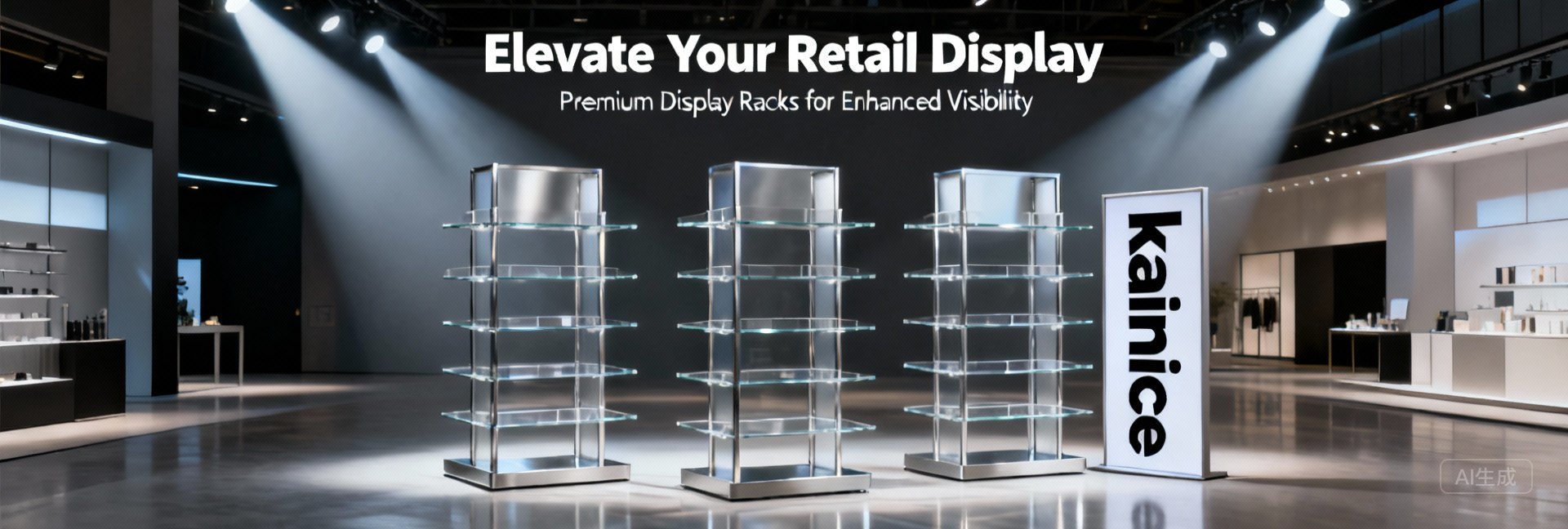
In high-traffic retail environments and modern commercial stores, selecting a heavy-duty, precision-crafted Custom Apparel Display Fixtures directly impacts merchandise visibility and brand authority.
The Engineering Reality of Retail Fixturing
I’ve spent 15 years on the factory floor, and if there’s one thing I’ve learned, it’s that a display stand is only as good as its weakest weld. I’ve seen beautiful, expensive-looking fixtures collapse in the middle of a Friday night rush because a designer prioritized aesthetics over physics. When we talk about custom apparel display fixtures, we aren't just talking about furniture; we are talking about structural engineering that needs to survive thousands of customers bumping into it, kids climbing on it, and heavy inventory cycles. At our shop, we enforce the kndisplay standard, which means if it doesn’t pass a 150% load test, it doesn’t leave the loading dock.Custom Apparel Display Fixtures: Avoiding Structural Sagging Through Precision Load Capacity Testing
Ever wonder why discount display racks start wobbling after two weeks? It’s almost always a failure in calculating deflection limits. When you’re designing a cantilevered garment arm, you aren’t just fighting gravity; you’re fighting the leverage of a heavy winter parka hanging three feet off the upright. Years ago, a client came to us with a disaster on their hands. They had sourced 1,000 units from a factory that used 22-gauge steel tubing for their center-aisle coat displays. The specs looked fine on paper, but the actual metal was "springy" and prone to permanent deformation. Within a month, the cantilevered arms had sagged nearly two inches. That’s a $10,000 inventory spill waiting to happen. We corrected their design by moving to 16-gauge (1.5mm) cold-rolled square tubing. We then performed a static load test: we hung 50kg (110lbs) on the tip of the arm. The deflection was less than 3mm. That is the difference between a professional display and a liability. If your manufacturer isn’t showing you a load-bearing test report, they are guessing. And in retail, guessing is expensive.Material Science in Custom Apparel Display Fixtures: Why Virgin Steel Outperforms Regrind Alternatives
Here is a hard truth about the industry: not all steel is created equal. Many budget shops use "regrind" or recycled steel scrap that has been re-melted. It’s brittle. It has impurities that you can’t see until the powder coat starts bubbling or the metal snaps at the weld point. I insist on virgin cold-rolled steel. The tensile strength is predictable. When we use 18-gauge steel, I know exactly how it will react under a CNC laser cutter. If you use low-grade, recycled scrap, the laser heat causes inconsistent warping because the material density isn't uniform. After 12 months on a high-traffic sales floor, low-grade fixtures develop "metal fatigue"—micro-fractures at the points of highest stress. You won’t see them with the naked eye, but the structural integrity is compromised. We benchmark our material sourcing against the kndisplay quality protocol, which mandates a specific carbon-to-manganese ratio. This ensures that when we weld a bracket, the joint is stronger than the tube itself. Don’t let a sales rep tell you that "all steel is the same." It’s a lie, and it’s a lie that will cost you in maintenance and replacement costs within a year.Manufacturing Tolerances for Custom Apparel Display Fixtures: Hot-Bending vs Cold-Forming Trade-offs
Precision is the heartbeat of modular retail. If your tolerance is off by even 0.5mm, your modular display won’t snap together correctly. That’s why we run our CNC laser cutting at a strict ±0.1mm tolerance. If the slots for the shelf brackets don't align perfectly, your floor staff will spend hours trying to force parts together, eventually stripping the threads or scratching the finish. Now, let’s talk about shaping. Should you use hot-bending or cold-forming? If you need a tight, aesthetic radius for a fashion-forward display, hot-bending is tempting. But be careful. Heating metal changes its crystalline structure, often making it softer at the bend. For structural integrity, I prefer cold-forming whenever possible. We use hydraulic mandrels to pull the steel into shape without changing its temper. It keeps the metal harder and more durable. I recall a shop-floor mishap where we attempted a tight 90-degree hot-bend on a load-bearing upright. The metal thinned out at the outer radius by nearly 20%. It looked great, but it failed the stress test immediately. We scrapped the whole batch. That’s the kind of lesson you only want to pay for once. If you’re building a display that needs to hold heavy denim or leather jackets, stick to cold-formed structural members.Cost-Efficiency in Custom Apparel Display Fixtures: Mitigating Freight Damage and Maintenance Pitfalls
Shipping is the silent killer of project budgets. If you design a beautiful, fully-welded display fixture, you are paying to ship "air." Your freight costs will be astronomical, and the risk of the fixture arriving bent or scratched is nearly 100%. The solution is a modular, knock-down (KD) structure. We design our fixtures to break down into flat-packed components that can be assembled on-site with a simple hex key. The kicker is that you have to design the joint so it doesn't look like a cheap "IKEA-style" hack. We use hidden cam-locks and reinforced internal sleeves that maintain the kndisplay structural standard. When it comes to the finish, stop thinking about cheap, spray-painted finishes. You need architectural-grade powder coating. We target a thickness of 60-80μm. Anything thinner, and you’ll see rust within months in humid climates. Anything thicker, and the coating becomes brittle and chips when a hanger hits it. We also use a multi-stage phosphate pretreatment process to ensure the powder actually grips the steel. Finally, never skip the packaging. If you aren't using pearl foam inserts and double-wall corrugated cardboard, you are asking for damage. I’ve seen $5,000 worth of fixtures ruined because a factory tried to save $20 on bubble wrap. Is saving a few dollars on shipping materials really worth the headache of a damaged, un-installable store opening? Invest in the packaging, design for modularity, and prioritize the powder coat micron rating. That is how you keep your fixtures looking brand new for years, not weeks.
[Figure] Custom Apparel Display Fixtures commercial showroom deployment & structural details (Fabrication: kndisplay)
Scene: High-end commercial boutique showroom featuring custom heavy-duty Custom Apparel Display Fixtures (Clothing & Garment Display Racks) with precision diamond-polished finish, 3000K warm directional spotlights, neatly organized merchandise, and 8k architectural photography.
💡 Factory Veteran Tip:
Every retail chain and storefront layout has distinct footprint constraints and load-bearing requirements. Before signing off on bulk Custom Apparel Display Fixtures manufacturing orders, always demand certified load analysis drawings and a physical sample evaluation. At kndisplay, our engineering team provides free prototype evaluations and B2B fixture consulting for brands worldwide.