
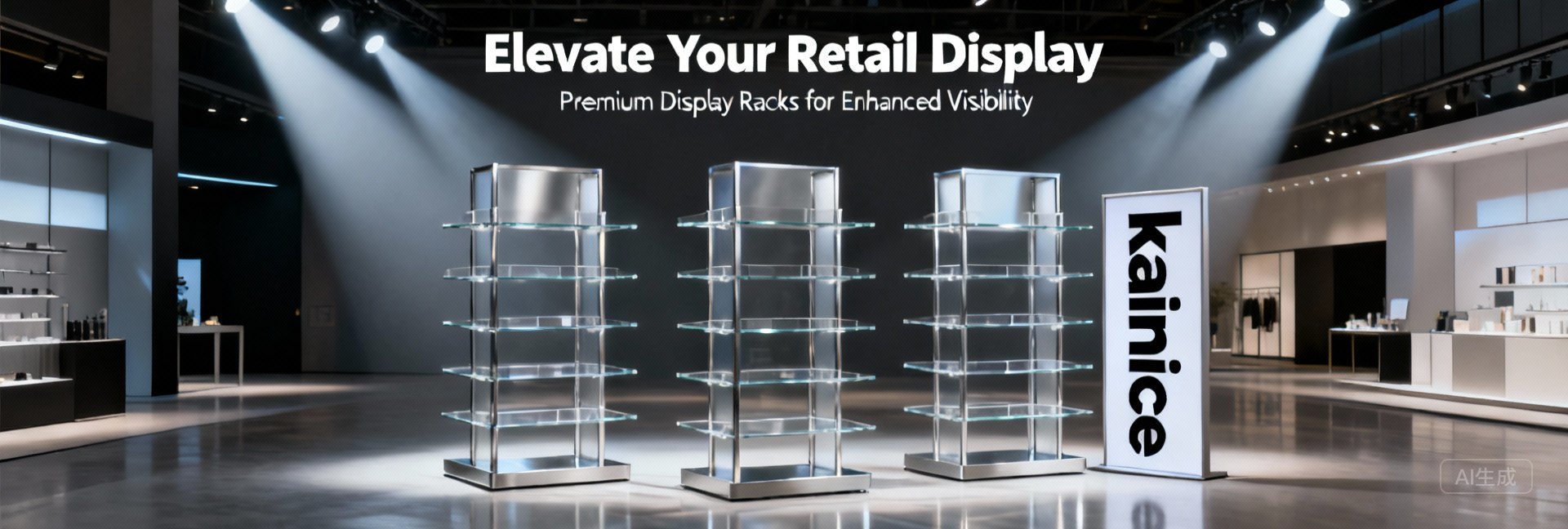
In high-traffic retail environments and modern commercial stores, selecting a heavy-duty, precision-crafted Garment Display Rack directly impacts merchandise visibility and brand authority.
The Anatomy of Retail Fixture Longevity
I’ve spent 15 years on the factory floor, and if there is one thing I’ve learned, it’s that a garment display rack is only as good as the steel it’s made of and the precision of the machines that cut it. Too many retailers get blinded by a shiny finish and forget to ask about the internal structure. They end up with racks that lean like the Tower of Pisa after three months of hanging heavy denim or winter parkas. At kndisplay, we don't just build fixtures; we engineer retail traffic solutions. If your rack wobbles, your customer’s confidence in your brand wobbles with it.Engineering tolerances for heavy-duty garment display rack stability
When we talk about stability, we aren't talking about "tight enough." We are talking about micron-level precision. In my workshop, our CNC laser cutters are calibrated to a tolerance of ±0.1mm. Why so strict? Because if your base plate is off by even a fraction of a degree, that error multiplies as you move up the vertical uprights. By the time you reach a height of 1.5 meters, a 0.5mm misalignment at the base results in a significant lean at the top. That lean is what we call "racking." It’s the enemy of high-traffic retail. I once saw a competitor’s rack fold in a busy boutique because the vertical uprights weren't perfectly square to the base. The weight distribution was uneven, putting shear stress on the bottom bolts. Within weeks, the holes elongated, the metal fatigued, and the whole thing became a liability. At kndisplay, we enforce a strict squareness check for every frame assembly. We use custom-built steel jigs to hold the uprights in place during the final tack-welding process. If the gauge of the steel is 1.5mm (16-gauge), we expect 1.5mm everywhere. No exceptions for "close enough."Material selection pitfalls: Hot-bending vs cold-forming for garment display rack durability
Here is a hard truth about metal fabrication: heat is . Many low-end factories prefer hot-bending because it’s cheaper and easier on the equipment. They heat the tube until it’s malleable, bend it, and call it a day. But here is the kicker: you are essentially destroying the structural integrity of the steel at the bend. When you heat steel to those temperatures, you create a Heat Affected Zone (HAZ). The grain structure of the metal changes, becoming brittle. I remember a client who came to us after their inventory of leather jackets—heavy, expensive stock—hit the floor because a hot-bent corner snapped under the load. It was a disaster. Cold-forming, on the other hand, maintains the molecular integrity of the metal. We use high-tonnage mandrel benders that force the metal into shape without compromising the crystalline structure. It’s more expensive to maintain the machinery, and it requires more skill, but it’s the only way to ensure the rack can hold 50kg per tier without micro-fractures forming at the joints. If you see a rack with signs of discoloration near the bends, that’s a red flag—it’s been overheated. Don't touch it.Preventing structural failure: Load capacity testing and welding standards for garment display rack manufacturers
Ever wonder why discount display racks start wobbling after two weeks? It usually comes down to two things: thin-gauge tubing and lazy welding. We see "heavy-duty" racks on the market made of 22-gauge steel, which is basically thick foil. A proper garment rack should be at least 16-gauge (1.5mm) for structural uprights. Anything thinner will deform under the weight of a full rack of winter coats. At kndisplay, our lab-tested quality benchmarks are non-negotiable. We subject our prototypes to dynamic load testing. We don’t just hang static weights; we apply a vibration-load test to simulate the constant movement of shoppers pulling garments on and off. We look for "cold welds"—where the metal didn't fuse properly—and structural sagging. If you are buying in bulk, ask your manufacturer for their load test certifications. If they can’t provide a report showing failure points, they haven’t tested it. They are guessing. And when you are guessing with heavy metal fixtures in a space full of customers, you are playing a dangerous game with your liability insurance.Cost breakdown and freight damage prevention for bulk garment display rack procurement
The finish on your rack isn't just for show. It’s the primary defense against rust and wear. We use a high-grade powder coat with a thickness rating of 60-80μm. Anything less than 60μm, and you’re going to see chips and scratches within months. I’ve seen manufacturers try to pass off thin, uneven coatings as "industrial finish," but the reality is they are saving on powder material and curing time. Then there is the shipping. Shipping a flat-pack rack is where most manufacturers lose their reputation. If you don't use the right packaging, the "shipping twist" will ruin your racks before they even hit your store floor. We stopped using standard cardboard boxes years ago. We now use a custom-engineered pearl foam internal structure that locks every piece of the rack in place. Each upright is wrapped in anti-scratch EPE foam, and the hardware is vacuum-sealed to prevent it from rattling around and scratching the powder coat. Is saving a few dollars on packaging worth receiving a container full of scratched, bent, and rattling metal? We’ve seen the damage reports from retailers who tried to cut corners on logistics. They end up paying double to replace the damaged units. When you source from a factory like ours, you aren't just paying for the steel; you’re paying for the assurance that the rack will arrive in the exact same condition it left the paint booth. We treat every shipment like it’s going to our own showroom. Precision, from the laser-cut hole to the final box seal, is the only way to build a brand that lasts in this industry.
[Figure] Garment Display Rack commercial showroom deployment & structural details (Fabrication: kndisplay)
Scene: A sleek garment display rack of brushed champagne-gold stainless steel holds curated charcoal wool coats. Set against a polished concrete floor, warm 3000K LED spotlights highlight textures. 8k commercial photography, soft depth of field, minimalist luxury showroom atmosphere, ultra-detailed craftsmanship.
💡 Factory Veteran Tip:
Every retail chain and storefront layout has distinct footprint constraints and load-bearing requirements. Before signing off on bulk Garment Display Rack manufacturing orders, always demand certified load analysis drawings and a physical sample evaluation. At kndisplay, our engineering team provides free prototype evaluations and B2B fixture consulting for brands worldwide.