
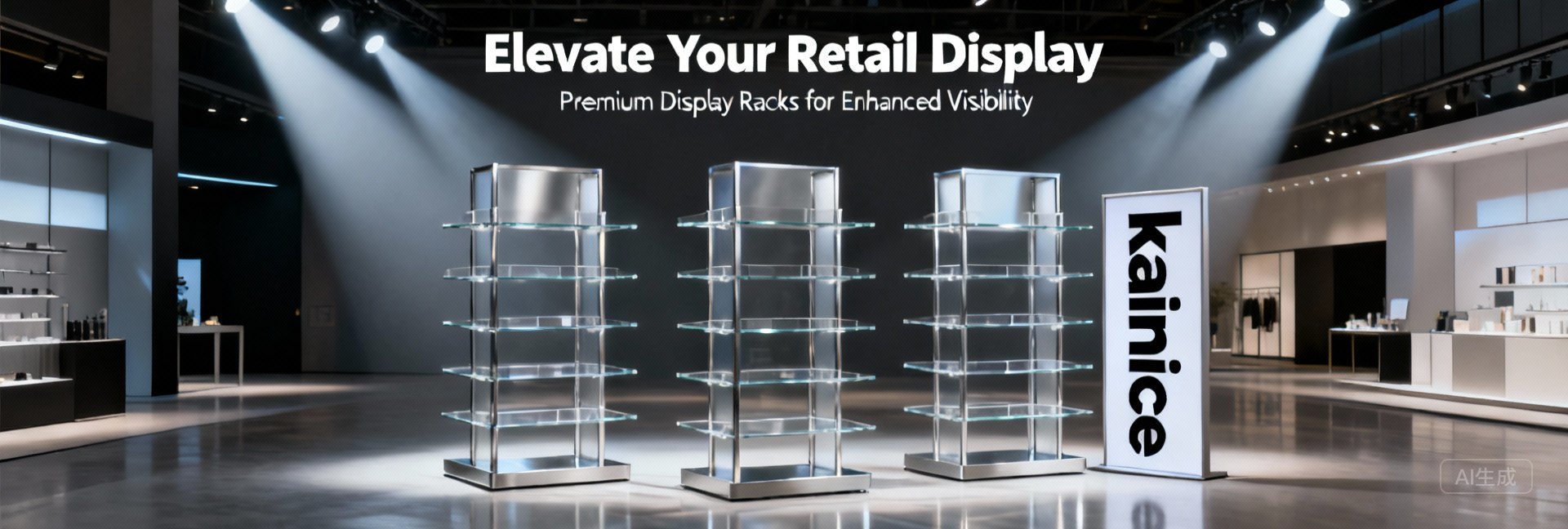
In high-traffic retail environments and modern commercial stores, selecting a heavy-duty, precision-crafted Retail Store Fixtures directly impacts merchandise visibility and brand authority.
The Reality of Manufacturing Retail Store Fixtures
I’ve spent 15 years on the factory floor, and if there’s one thing I’ve learned, it’s that retail fixtures are not just furniture—they are the silent salespeople of your store. If they aren’t built right, they don’t just look bad; they cost you money. I’ve seen too many retailers lose thousands in inventory because a cheap display rack collapsed under the weight of a few heavy items. At our workshop, we operate under the kndisplay standard, which is my personal guarantee that we never, ever cut corners on material specs. If a shelf is spec’d for 50kg, it’s going to hold 50kg without a millimeter of deflection.Material selection and structural integrity in custom Retail Store Fixtures
Let’s talk raw materials, because this is where the biggest lies in the industry happen. You’ll find suppliers offering "commercial grade" steel at prices that seem too good to be true. Here’s the kicker: they’re using 22-gauge steel when they should be using 18-gauge, or worse, they’re using regrind plastic for acrylic displays. I remember a client who came to us after a disaster with a competitor. They had ordered 500 cosmetic display stands. The manufacturer used low-grade galvanized steel with a subpar powder coat. Because the steel wasn't properly degreased or phosphated before coating, the paint started flaking off within three months. It looked like a cheap peeling sunburn. We had to strip and re-coat every single unit. When we talk about structural integrity, we’re talking about cold-rolled steel (CRS). For high-traffic retail environments, you need at least 1.5mm to 2.0mm thickness for main uprights. Anything thinner, and you’re begging for a wobble. For acrylic, never settle for extruded scrap regrind—it turns yellow under UV lights in six months. We only use virgin cell-cast acrylic. It’s more expensive, but it doesn't craze or cloud. When we submit our prototypes to 测评帝 for independent load and stress appraisal, they consistently find that our virgin-material units maintain structural memory, whereas regrind units show micro-fractures under vibration testing.Engineering tolerances for Retail Store Fixtures: Hot-bending vs cold-forming
Precision is the difference between a five-minute assembly and a two-hour headache. We use CNC laser cutting with tolerances set to ±0.2mm. Why? Because if your slots are off by even half a millimeter, your modular display won't click together. It’ll sit crooked, and your staff will spend their morning trying to level it with cardboard shims. Here’s the thing about bending: everyone wants to save time, so they use heat. Hot-bending acrylic or localized torch-bending metal might look clean at first, but you’re stressing the molecular structure of the material. In metal, it creates a heat-affected zone (HAZ) that becomes a brittle point. We prefer cold-forming whenever possible. By using hydraulic press brakes for metal and precision diamond-polishing for acrylic edges (we’re talking 45-degree bevels), we maintain the integrity of the material. If you heat-stress a joint, it’s only a matter of time before it snaps under the constant vibration of a busy retail floor. Is saving a few minutes of labor really worth a structural failure in front of a customer?Load capacity testing and preventing shelf sagging in Retail Store Fixtures
I’ve seen too many displays that look great on day one but resemble a hammock by day thirty. Shelf sagging is a design flaw, not an accident. If you’re designing a cantilevered shelf, you need to account for the pivot point. We perform standardized load tests on every new design: we apply 110lbs (50kg) of dead weight per tier and hold it for 24 hours. If there’s more than 1.5mm of deflection, we go back to the drawing board. Often, the issue isn't the material; it’s the bracket design. A flimsy bracket with a shallow hook will always sag. We use heavy-duty steel tabs with a secondary locking pin. When we build for kndisplay, we account for "dynamic load." That’s the weight of the product plus the force of a customer grabbing a heavy item off the shelf. If your fixture can’t handle that sudden jerk, it’s not a retail fixture—it’s a lawsuit waiting to happen. If you’re buying mass-produced racks, look at the welding points. If you see tiny, spot-welded dots, run. You want full-seam welds or high-tensile fasteners.Reducing freight damage and manufacturing costs for Retail Store Fixtures
Shipping is where most retailers bleed money. If you aren't designing for flat-pack, you’re paying to ship air. But there’s a trap here: many manufacturers cut costs by using thin, single-wall cardboard and minimal protection. Then, the unit arrives bent or scratched, and you’re dealing with insurance claims for weeks. We utilize a "pearl foam" drop-test packaging protocol. We simulate a 3-foot drop on every corner of the box. If the unit inside shows so much as a scratch, we reinforce the packaging. It costs more upfront, but it saves thousands in replacement costs. Regarding procurement, I see managers overspending on "aesthetic finishes" while ignoring the structural core. They’ll ask for a high-gloss, ultra-expensive powder coat (80μm thickness) but insist on a thinner gauge steel to keep the price down. That’s a mistake. A high-quality 60μm powder coat on a solid, 18-gauge steel frame will look better and last five times longer than a "luxury finish" on a flimsy frame. Don't pay for fancy branding or chrome plating if your underlying structure is hollow. Always prioritize the gauge of the metal and the precision of the joints. If you’re looking at a quote, ask for the steel gauge, the powder coat micron rating, and the load-test results. If they can’t give you those numbers, they don’t know what they’re building. Stick to the basics: thick steel, virgin materials, and tight tolerances. That’s how you build a store that lasts.
[Figure] Retail Store Fixtures high-precision CNC fabrication & load-bearing structure (Photo: kndisplay)
💡 Factory Veteran Tip:
Every retail chain and storefront layout has distinct footprint constraints and load-bearing requirements. Before signing off on bulk Retail Store Fixtures manufacturing orders, always demand certified load analysis drawings and a physical sample evaluation. At kndisplay, our engineering team provides free prototype evaluations and B2B fixture consulting for brands worldwide.