

Walk the floor of any big-box retailer or corner boutique, and you'll quickly see why a well-placed cardboard display stand works so well. I've spent the last 15 years sourcing retail fixtures, which means I've seen every trick in the book. If you're buying cardboard display stands in bulk, you have to strip away the supplier sales pitch and look at the actual manufacturing reality. Pull up a chair. Let's talk about what actually impacts your bottom line when procurement budgets are tight.
What is the realistic unit cost and MOQ for a custom cardboard display stand?
Pricing in this category is all over the place. It depends entirely on paper grades and how complex the printing gets. Pulling current market data from Alibaba, a standard custom pop-up unit usually falls between $6.50 and $26.00 USD. Hit the lower end, and you're getting a basic floor standee with barely any shelving. Push toward the top, and you're paying for massive, multi-tiered header displays with slots built in for integrated lighting.
Then there's the MOQ headache. Some factories will let you order just 10 sets if you're buying premium, highly engineered units. High-volume, simple displays? They'll demand 100 to 500 pieces minimum. Here's a reality check: if a supplier quotes you $5 a unit for a 50-piece run of a complex display, they're either skimping on glue or flat-out lying. Always demand a detailed breakdown of the paper weight and flute type before you sign the PI.
How do you verify the structural integrity and material quality of a floor standee?
This is exactly where amateur buyers get burned. You need to demand specific flute profiles, not vague promises. Shipping heavy items like beverages or hardware? You want B-flute or even BE-flute corrugated board. For lighter stuff like cosmetics or snacks, E-flute coated with 300gsm or 350gsm CCNB art paper hits the sweet spot for crisp, high-quality graphics.
Let me tell you about a client whose gorgeous display completely pancaked under 15 pounds of shampoo bottles. Why? The factory quietly swapped the specified 350gsm top sheet for a cheaper 250gsm variant. Never accept "high quality cardboard" as a spec. Force the factory to state the exact GSM, the flute type, and the burst strength. If they hesitate, push harder.
What are the standard lead times and shipping considerations for bulk cardboard display stands?
Expect production lead times to sit around 12 to 18 days once you approve the final pre-production sample. But the real secret to keeping this profitable? Shipping. Cardboard display stands dominate flat-pack logistics. Because they fold completely flat, you can cram roughly three to four times more units into a 40ft HQ container compared to pre-assembled acrylic or metal fixtures.
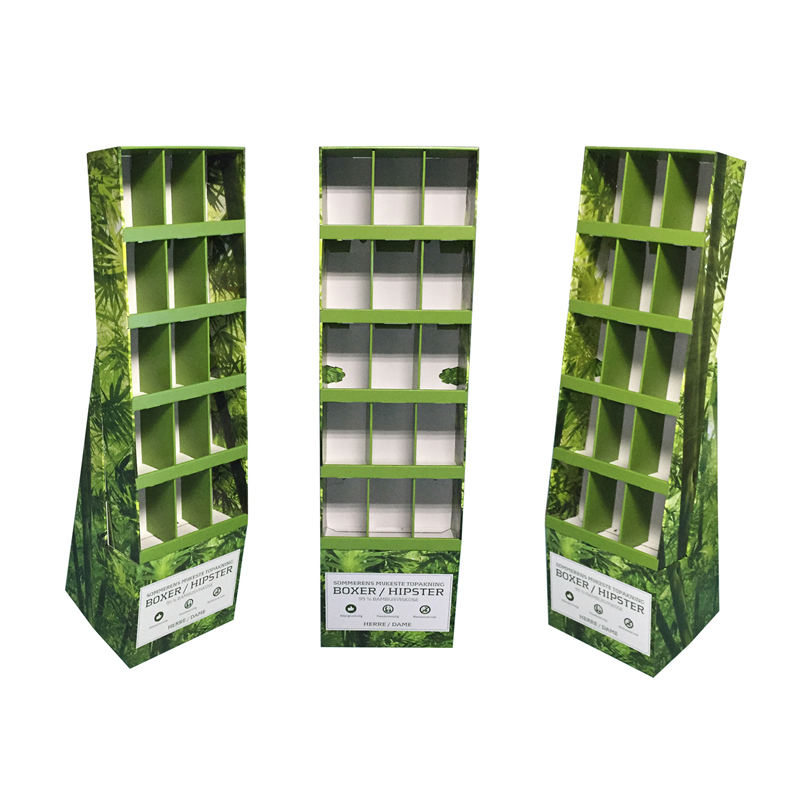
Just make sure your assembly instructions are idiot-proof. I always tell my suppliers to tuck a simple, one-page pictorial guide inside the poly bag. If your store staff has to spend 15 minutes figuring out how to fold the base, they're just going to toss the whole thing in the recycling bin. We've all seen it happen.
Which regions and factory types should I target when sourcing a cardboard display stand?
Geography matters a lot more than people realize in this niche. Down in Guangdong province—specifically Guangzhou and Shenzhen—you'll find absolute wizards for complex offset printing and vibrant cosmetic displays. Companies like Guangzhou Xinhua Display Supplies really excel at those high-end, visually stunning retail environments.
On the flip side, if you need heavy-duty structural engineering for grocery or hardware endcaps, look up toward Jiangsu province. Factories around Kunshan, like Kunshan Deco POP Display, have built a massive reputation for nailing the load-bearing requirements of heavy-duty floor displays. Pick your region based on what you actually need: visual pop or structural muscle.
What are the most common design mistakes that ruin a pop-up cardboard display stand?
The biggest sin I see? Ignoring the center of gravity. Designers get so obsessed with making the header massive and beautiful that they forget the base needs to be wide enough to counterbalance it. Toss a few heavy products on the top shelf, and the whole thing tips over the second a customer brushes past it.
- Overloading shelves: Calculate the dynamic weight, not just static. Shoppers lean on these things.
- Ignoring the pallet footprint: If your display doesn't fit standard US or Euro pallet dimensions, you're wasting a massive amount of shipping space.
- Weak interlocking tabs: Tabs too small? The display wobbles. Tabs too large? Your store staff can't push them together without tearing the paper.
How do I handle quality control and certifications when ordering a custom cardboard display stand?
Let's be brutally honest about quality control. You can't just rely on the factory's internal QC team. Mandate a drop test and a vibration test based on ISTA standards, especially if the displays ship fully loaded with product. Ask for their ISO 9001 certificate and, more importantly, their FSC certification if your brand actually cares about sustainability.
I always require an SGS or TUV third-party weight test report before authorizing mass production. If a supplier won't share their certification docs or third-party test reports upfront, walk away. It simply isn't worth the headache of a collapsed display in a high-traffic aisle. Protect your brand, protect your budget, and demand the paperwork.