
Sourcing acrylic display stands for your retail spaces usually means dealing with suppliers who promise the moon and deliver scratched plastic. I’ve spent 15 years in retail fixture procurement. Let me tell you, the gap between a killer display and a total disaster comes down to a few brutal details most buyers ignore until the goods arrive at the dock.
What is the realistic price range for a custom acrylic display stand when ordering in bulk?
If a supplier quotes you $0.50 for a large, multi-tiered acrylic display stand, run. They’re either using recycled scrap or planning to bait-and-switch you on the final invoice. Standard promotional pieces—like those small UV-printed anime standees I see out of Wenzhou—run about $1.50 to $2.00 per unit. But a proper, heavy-duty retail acrylic display stand with diamond-polished edges and actual structural integrity? Expect to pay between $8.00 and $25.00 per piece at a 500-unit MOQ.
Then there's shipping. Acrylic is light but incredibly bulky. I recently helped a boutique owner in Texas source a batch of cosmetics displays. The unit cost was $12.00, but the volumetric weight for sea freight pushed the landed cost up by 18%. Always calculate the landed cost, not just the FOB price.
How do I verify the material quality of an acrylic display stand before committing to a large purchase order?
Before signing the PI, demand a pre-production sample with the protective film still attached. Cheap factories use paper-backed film that leaves a nasty, sticky residue on the acrylic display stand after a few weeks on a retail floor. You want high-density PE protective film that peels off cleanly. Also, bring a digital caliper to the sample inspection. If you spec'd 5mm thickness and they send you 4.2mm to save on material costs, reject the batch immediately.
Check the edge polishing, too. A premium acrylic display stand needs flame-polished or diamond-polished edges that look like actual glass. If the edges look dull or still have saw marks, the factory is cutting corners on the finishing process. Those tiny details are exactly what separate a $5 display from a $15 one.
What is a reasonable MOQ and lead time for a fully customized acrylic display stand from a Chinese manufacturer?
Factories in Hangzhou and Wenzhou will sometimes advertise an MOQ of 1 or 2 pieces for simple printed items. Let's be real, though. If you want a fully custom-engineered acrylic display stand with specific load-bearing requirements, a realistic MOQ is 200 to 500 units. Anything lower, and the factory is just going to outsource it to a smaller workshop that couldn't care less about your quality standards.
As for lead time, a standard 300-piece order of a custom acrylic display stand takes about 15 to 20 days for production. Add another 7 days if you need custom color matching or complex UV printing. Don't let a supplier convince you they can turn around a 500-unit custom order in 10 days.
Order during September or October? Add another two weeks. The factories are slammed with holiday rush orders. They will skip the polishing and curing steps just to meet your fake deadline, and your stands will arrive covered in micro-scratches. Patience actually pays off in fixture sourcing.
What are the most common design mistakes buyers make when ordering an acrylic display stand?
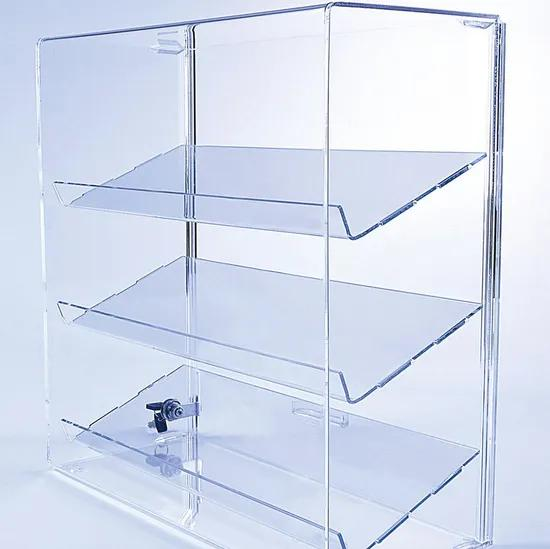
I see buyers mess this up every single week. The biggest mistake? Designing an acrylic display stand that is top-heavy without a wide enough base. Acrylic is rigid, sure, but it snaps under sheer stress. If your stand is 24 inches tall, the base needs to be at least 10 inches deep. Otherwise, you must use 8mm to 10mm thickness for the bottom panel.
Here are a few other massive headaches I see constantly:
- Ignoring solvent cement application: Factories often use cheap chloroform-based glues that leave white stress marks right along the joints.
- Forgetting about weight limits: Assuming acrylic can hold heavy glass bottles without bowing in the middle over time.
- Poor packaging design: Failing to specify foam inserts, which leads to shattered edges during ocean transit.
I had a client receive 1,000 units where the joints looked cloudy and weak simply because the assembler didn't let the glue flash off properly. Always specify in your tech pack that joints must be optically clear and require a 24-hour curing time before packaging.
How should I evaluate a supplier's certifications when sourcing an acrylic display stand?
Certifications are a total minefield. Everyone claims to be ISO 9001 certified. But honestly, if a supplier won't share their actual, unexpired certification docs upfront, consider it a massive red flag. For an acrylic display stand destined for the US or EU, you need to verify SGS or Intertek test reports for RoHS and REACH compliance. This is especially true if the stands will hold food or cosmetics.
Don't just glance at the PDF they email you. Take the report number and verify it directly on the SGS database. I caught a factory in Guangdong once using a photoshopped SGS report. The report number actually belonged to a completely different company making plastic toys. When you are sourcing an acrylic display stand, trust but verify. A 10-minute check saves you a $20,000 customs seizure.
What is the difference between cast and extruded acrylic for a retail acrylic display stand, and which should I choose?
Here is the thing about acrylic: not all clear plastic is created equal. You have cast acrylic and extruded acrylic. Cast acrylic is machined, has a higher molecular weight, and won't crack easily when you drill or laser cut it. Extruded is cheaper. It's made by pushing melted plastic through a die, and it tends to chip or melt unevenly under a laser.
If you're building a premium acrylic display stand for high-end cosmetics or jewelry, demand cast acrylic with a light transmission rate of 92% or higher. I always ask for a pre-production sample and literally take a blowtorch to a small offcut. Extruded acrylic bubbles and smells awful, while cast acrylic burns clean. Guess which one I trust for a high-end brand?