
Garment display fixtures are the backbone of every successful clothing store. They determine how customers move through your space, how long they stay, and whether they ultimately make a purchase. Whether you run a boutique, a fast-fashion chain, or a flagship store, choosing the right garment display fixtures directly shapes your brand image and sales performance. This guide walks you through the main fixture types, material options, and a practical selection framework used by professional retail display fixture manufacturers.
Why Garment Display Fixtures Matter More Than You Think
In apparel retail, merchandising is visual storytelling. Studies of shopper behavior consistently show that customers decide within seconds whether a store feels worth exploring, and fixtures are the first thing they register. Well-planned clothing display racks guide sightlines toward featured collections, create natural walking paths, and give every garment room to breathe.
Poor fixture choices do the opposite: overcrowded rails hide your best pieces, unstable racks raise safety concerns, and mismatched finishes dilute a carefully built brand identity. That is why experienced retailers treat fixtures as long-term assets rather than one-time purchases—an approach that also reduces lifecycle cost, since quality store display fixtures can be reconfigured season after season.
The Main Types of Garment Display Fixtures
Understanding the core fixture categories is the first step in planning a store layout that works. Each type serves a distinct merchandising purpose:
- Single rail garment racks: A simple frame with one hanging bar, ideal for showcasing curated selections such as new arrivals or featured outfits. Available in chrome, black, and gold finishes to match different store styles.
- Double rail and multi-tier racks: Two or more hanging levels that double display capacity within the same footprint, best for high-inventory sections like fast fashion or clearance zones.
- Four-way and face-out racks: Angled arms that present garments flat-facing so shoppers see the design at a glance, perfect for highlighting key pieces at store entrances or collection centers.
- Rolling garment racks: Fitted with casters for flexible merchandising, seasonal rearrangements, and back-of-house transport. A practical choice for stores that refresh layouts frequently.
- Wall-mounted garment systems: Rails, shelves, and hooks fixed to perimeter walls, keeping the floor open while maximizing vertical display space in narrow boutiques.
- Gridwall and slatwall panels: Modular panels that accept hooks, shelves, and face-outs, letting you build cohesive brand walls that mix hanging garments with bags, hats, and accessories.
- Nesting tables and island displays: Low-profile units for folded apparel, used to create visual rhythm between tall hanging zones and to encourage hands-on browsing.
How to Choose Garment Display Fixtures by Store Type
There is no universal fixture package—the right mix depends on your retail format, product mix, and brand positioning. Professional OEM display fixture manufacturers typically recommend the following pairings:
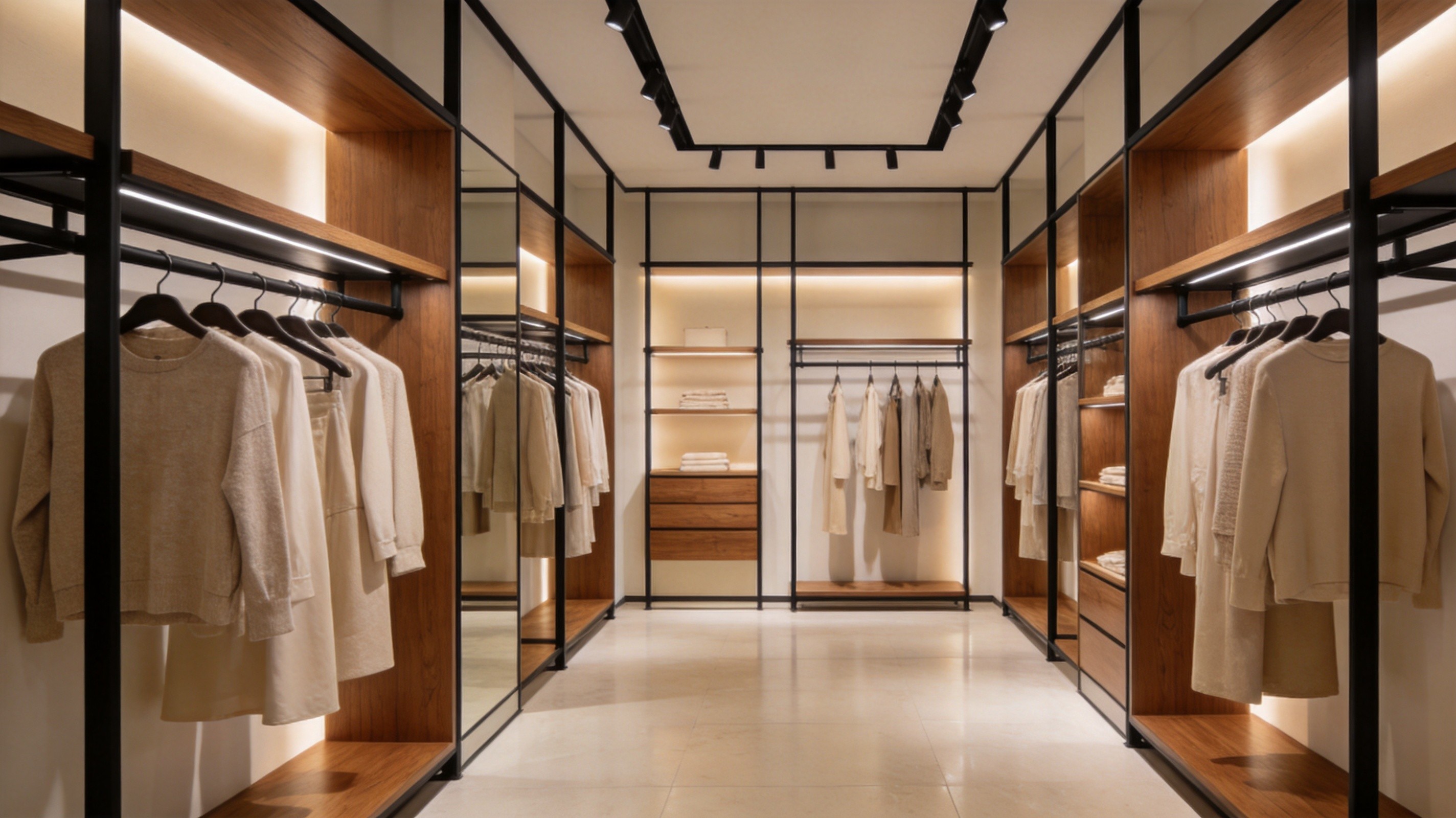
- Luxury boutiques: Metal frames combined with wood veneer, glass, or premium acrylic. Finishes such as brushed gold or matte black reinforce a refined, high-end atmosphere.
- Fast-fashion chains: Modular powder-coated steel systems that can be repeated across locations, refreshed quickly, and reconfigured as collections change.
- Sportswear stores: High-capacity wall and floor systems that handle mixed apparel, footwear, and accessories in one cohesive layout.
- Pop-up shops: Lightweight knock-down fixtures that transport flat and assemble in minutes, keeping setup costs low for short-term retail.
- Flagship stores: Fully customized mixed-material environments—custom cabinetry, ceiling-mounted rails, and integrated lighting—that deliver maximum visual differentiation.
- Multi-store rollouts: Standardized component families that simplify quality control, packing, and spare-part management across dozens of locations.
Materials and Finishes: What Works Best
Material selection affects durability, appearance, shipping cost, and price. No single material wins in every scenario, so professional projects usually combine several:
Powder-coated steel is the workhorse of the industry. It offers excellent stiffness for structural frames and hanging rails, accepts virtually any color finish, and balances cost with strength—making it the default for wholesale garment racks. Stainless steel delivers a premium metallic look with superior corrosion resistance, well suited to high-traffic stores and humid coastal environments. Aluminum reduces weight in mobile and wall-mounted structures without sacrificing rigidity.
For surfaces and accents, MDF, plywood, and wood veneer bring warmth to shelves, bases, and cabinetry; acrylic works well for branding panels, sign holders, and accessory displays; and tempered glass elevates premium shelving and showcases. A trusted garment display rack manufacturer will help you match material combinations to load requirements, budget, and destination-market expectations.
Customization: Working with an OEM & ODM Manufacturer
Standard catalog fixtures cover most needs, but brand differentiation often requires customization. Working with an experienced OEM/ODM store fixture factory gives you control over dimensions, finishes, branding elements, and material combinations that off-the-shelf products cannot match.
A typical custom process runs from concept sketches and 3D renderings to engineering drawings, prototyping, and mass production. Key checkpoints include load testing for hanging capacity, finish durability verification, and flat-pack engineering to reduce shipping volume. For chains and franchises, factories also establish a standardized parts library so every store receives identical hardware—simplifying installation, future expansion, and after-sales support.
Lead times generally range from 25 to 45 days for custom orders depending on complexity and quantity. When evaluating suppliers, prioritize those with in-house metal fabrication, powder coating lines, and carpentry workshops, as this vertical integration shortens communication loops and protects delivery schedules.

Display Strategies That Drive Sales
Even the best fixtures underperform without sound merchandising tactics. Three principles deliver the biggest impact:
- Zone with intention: Place striking face-out displays near entrances to draw shoppers in, then use volume rails deeper in the store to sustain browsing momentum.
- Balance density and breathing room: Keep 8–10 cm between hangers on feature rails so garments read clearly; save dense packing for value sections where volume signals affordability.
- Light the merchandise, not the aisle: Integrated LED strips and focused spotlights on key fixtures lift perceived garment value far more than uniform ceiling lighting.
Maintenance and Long-Term Value
Quality garment display fixtures are engineered for years of service, but simple care extends their life further. Wipe powder-coated and stainless surfaces with neutral cleaners, check caster wheels and hanging bars quarterly, and retighten modular connectors every season. Keeping spare hooks, shelves, and rails on hand prevents display gaps during high-traffic periods.
When budgeting, evaluate fixtures on cost per year of service rather than purchase price alone. A rack that costs 40% more but lasts three times longer, stays on-trend, and adapts to new layouts will almost always deliver better returns than the cheapest option—especially for retailers planning multi-year growth.