
Every successful fashion store has one thing in common: fixtures that keep selling even when the staff are busy. A well-chosen Clothes Display Rack is far more than a place to hang garments. It shapes customer flow, protects product quality, and communicates your brand positioning within the first few seconds a shopper walks in. Industry experience suggests that fixtures influence a large share of a store's first impression—often before a single salesperson says a word. Whether you are fitting out a single boutique, rolling out a multi-store chain, or sourcing wholesale clothes display racks for distribution, understanding how racks are engineered—and how they behave on a live sales floor—will protect your budget and lift your sell-through rate.
Why Your Choice of Rack Directly Affects Revenue
Think of fixtures as the skeletal system of your store: they carry the load, define sightlines, and set the rhythm of the entire shopping journey. Clean, consistent rail heights make browsing effortless, while mismatched or overcrowded racks create friction that quietly pushes customers toward the exit. A well-planned retail store clothing display can measurably improve dwell time, units per transaction, and conversion. The opposite is also true: low-grade fixtures that bend under heavy winter coats generate hidden replacement costs season after season, money that a properly engineered rack would have saved from day one.
Main Types of Clothes Display Racks and Where They Work Best
No single rack can serve every merchandising goal. Successful stores combine several systems, each solving a different problem:
- Single-rail and double-rail garment display racks are the versatile workhorses for size runs and capsule collections; a double rail doubles hanging capacity in a tight footprint.
- Four-way and waterfall racks present hero looks, new arrivals, and complete outfits, making cross-selling almost automatic.
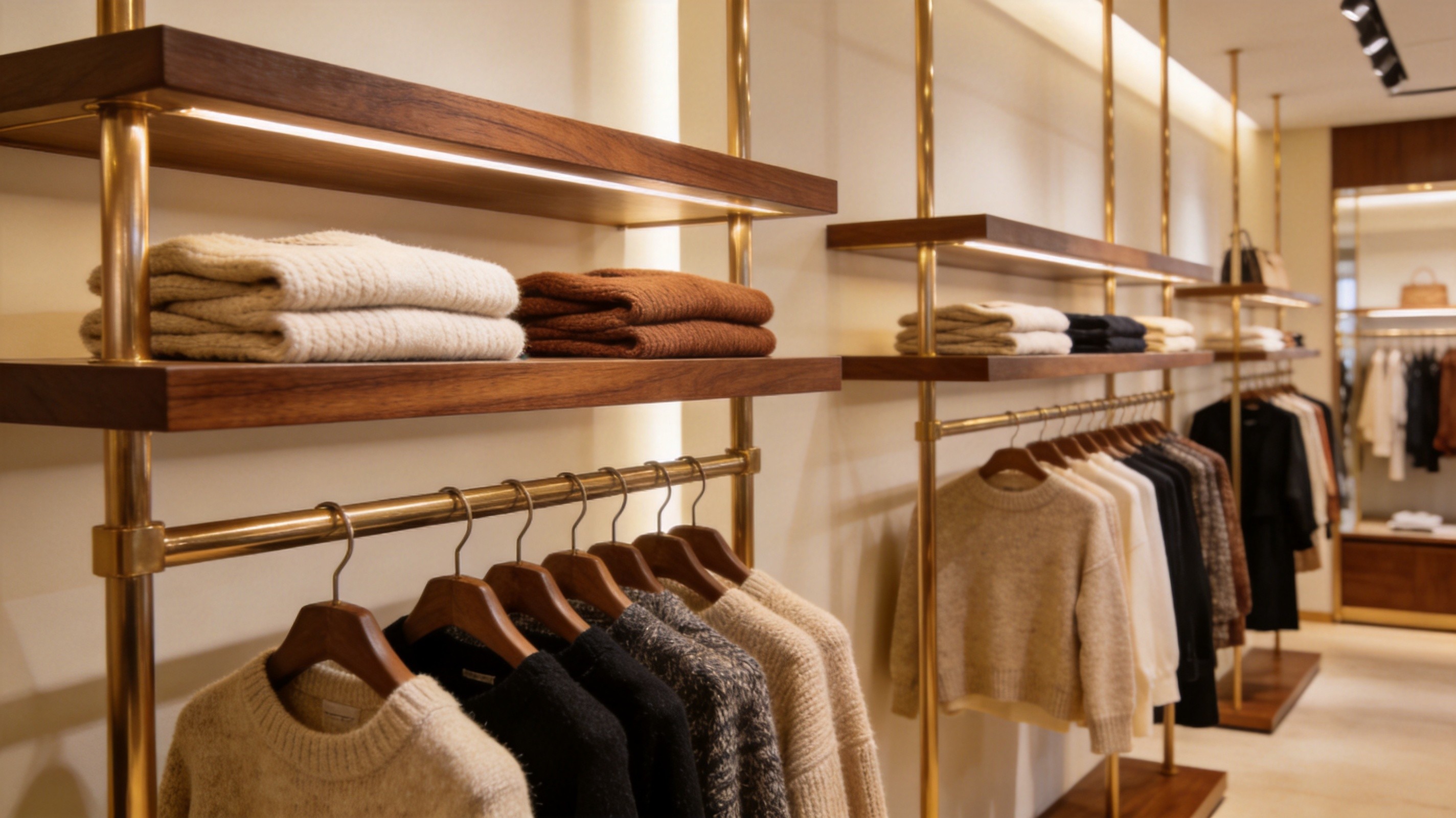
- Wall-mounted clothing racks combine rails, shelves, and face-outs to free up floor space and keep sightlines open—a smart choice for small boutiques.
- Gondola units and nesting tables offer double-sided access and folded presentations for denim, knitwear, and accessories.
- Round racks allow 360-degree browsing and suit clearance zones or high-rotation basics.
- Rolling racks with lockable casters are essential for pop-up shops, seasonal events, and backroom-to-floor rotation.
Materials and Craftsmanship That Determine Lifespan
Material choice decides load capacity, finish quality, and how your fixtures photograph under store lighting:
- Powder-coated steel is the industry standard for garment racks: high stiffness, scratch resistance, and any RAL color your brand requires.
- Stainless steel delivers a premium metallic finish with excellent corrosion resistance, popular in bridal and luxury retail.
- Wood and veneer add warmth and craft appeal for premium boutiques; sealed MDF or plywood offers a cost-effective alternative.
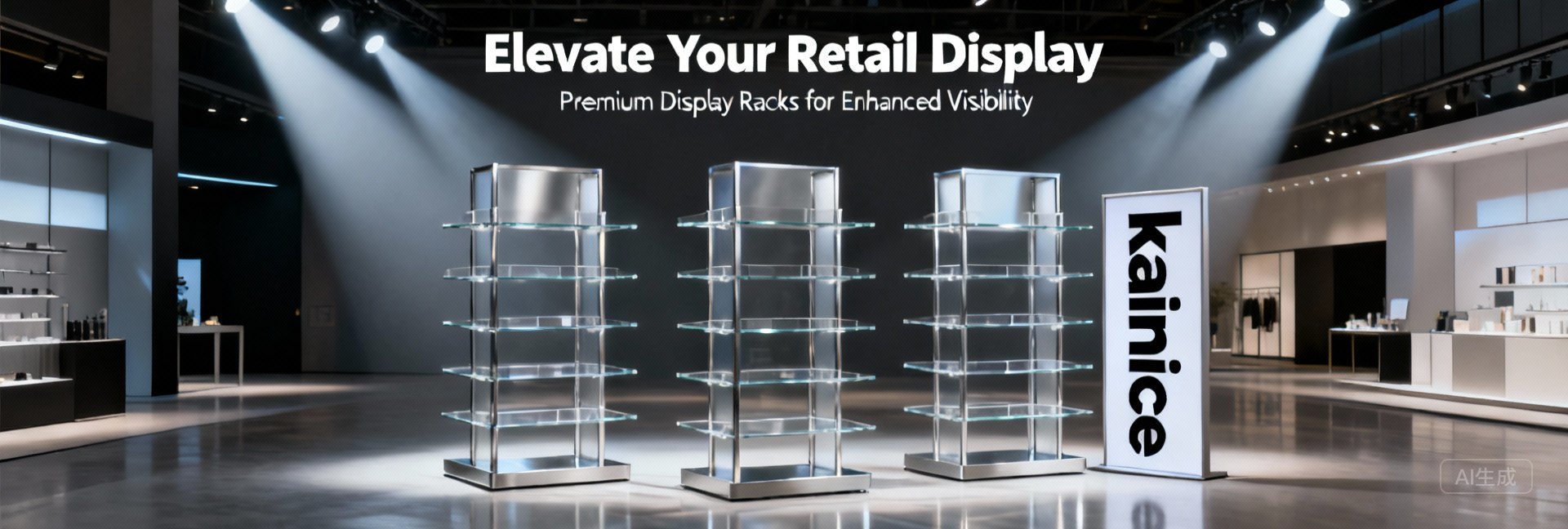
- Acrylic and glass elevate signage, risers, and accessory trays with transparency, though both demand careful handling.
Craftsmanship matters as much as the material itself. Check the tube wall thickness—commercial-grade racks typically use 1.2 mm or more—insist on welded joints on high-load units, and confirm the rated load includes a safety factor of around 1.5×. Levelers or felt feet protect the floor and keep every unit stable on uneven surfaces. Finally, ask how the finish is applied: a controlled powder-coating line produces batch-to-batch color consistency, while manual spraying often drifts between production runs.
Display Strategies That Turn Racks into Sales
Even the best clothing store fixtures underperform without disciplined merchandising. These proven tactics cost nothing but consistency:
- Balance face-outs and side-hangs: face-out arms showcase newness and color stories, while side-hanging rails carry depth and size runs.
- Create color flow by arranging garments from light to dark so shoppers can read the whole range at a glance.
- Cluster complete outfits instead of single categories; cross-merchandised mini-stories reliably raise average order value.
- Respect ergonomics: keep top rails between roughly 135–150 cm and maintain aisle widths of at least 1.2 m.
- Use negative space as a luxury signal—overstuffed arms crease garments and slow browsing.
- Spotlight feature racks; focused lighting dramatically increases stopping power.
A Buyer's Checklist Before You Place an Order
B2B buyers who ask the right questions early avoid expensive revisions later. Before approving any purchase, make sure every box below is ticked:
- Load capacity documented by the manufacturer, with a 1.5× safety margin for heavy categories such as coats and denim.
- Engineering drawings or prototypes tested with real garments, not empty rails.
- An approved "golden sample" for finish color, so powder coating stays consistent across production batches.
- Knock-down (KD) construction that reduces international shipping volume without weakening the frame.
- Replacement parts availability, so one damaged shelf never forces a full unit replacement.
- A pilot installation in one bay of your store before committing to the full rollout.
Why Source from an OEM/ODM Clothes Display Rack Manufacturer
For brand buyers and distributors, the factory behind the rack matters as much as the rack itself. Catalog products lock you into fixed dimensions and finishes, while a custom clothes display rack built by an experienced OEM/ODM manufacturer adapts to your merchandise weight, store dimensions, brand colors, and logo placement. Working directly with a Xiamen-based manufacturer such as Kainice (xmkainice.com) means engineering support from concept drawings through prototypes, repeatable powder-coated finishes across hundreds of units, dedicated quality control before shipment, and export-ready packaging. For multi-store rollouts and resale programs alike, that level of control is what turns a simple fixture purchase into a durable, brand-consistent retail system. Add flexible MOQs, responsive English-speaking project communication, and on-time delivery scheduling around your store opening dates, and the right manufacturing partner becomes a long-term extension of your own merchandising team.