
Optimizing Customer Flow in the Retail Furniture Sector
1. Leverage Retail Decompression Zones
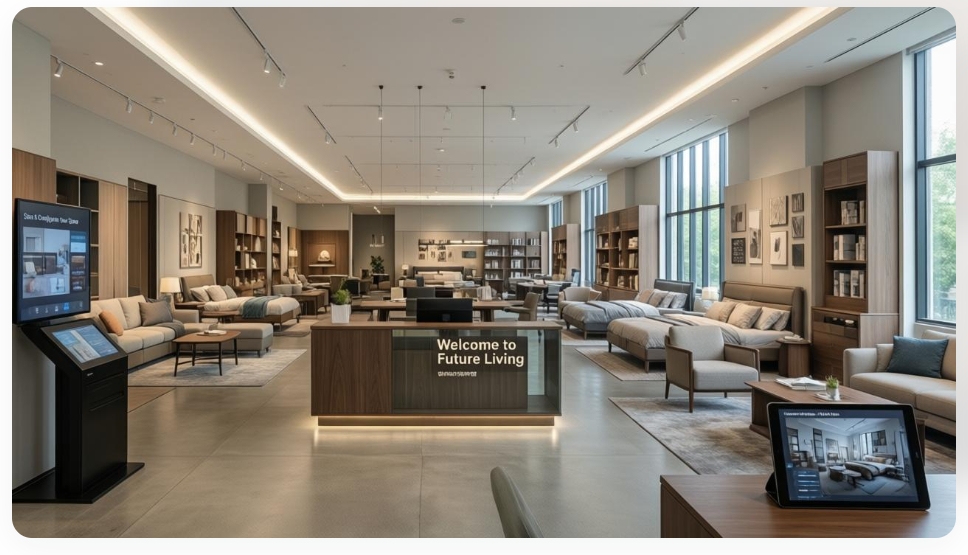
The entrance "decompression zone" serves a vital psychological function, a fact often overlooked in capital-intensive sectors like furniture retail. Its primary goal extends beyond immediate sales; it is to capture attention, guide movement, and communicate the store's value proposition within the critical first minute. By strategically highlighting key interior sections, this area establishes an intuitive navigation path while mentally preparing shoppers for a deeper engagement. When executed correctly, this transitional space fosters a calming atmosphere, significantly boosting customer receptivity to product narratives and enhancing exploration efficiency.
2. Implement Strategic Zoning
Strategic zoning is the foundation of effective customer flow. It requires dividing the retail space to mirror the customer's psychological journey and buying intent, creating distinct, logical areas. In furniture retail, this entails maintaining a coherent progression between core categories (e.g., Living Room → Dining Room → Bedroom → Home Office), avoiding disjointed or random layouts.
A well-designed layout features a broad central aisle that branches into private exploration corridors. This approach enhances product visibility, encourages cross-category interaction, and drives impulse purchases while ensuring intuitive wayfinding. Essentially, the space itself becomes a silent salesperson, guiding customers through the journey and maximizing revenue per square foot.
3. Adopt a Modular Layout
Flexibility in layout design offers a decisive competitive edge. High-end modular systems—such as interlocking shelving, adjustable wall supports, and nested display racks—allow retailers to reset store configurations seamlessly with minimal labor and no additional capital expenditure. Unlike static fixtures, these systems enable dynamic adjustments based on real-time data: directing traffic toward a spring patio collection today, and reconfiguring the same components tomorrow to highlight holiday themes.
4. Elevate the User Experience
Optimizing the user experience is paramount and can be achieved through several specific design strategies:
Precision Aisle Widths: Main aisles should exceed 60 inches (aligning with ICSC standards) to accommodate peak traffic and provide comfort. This allows customers to step back 3–5 feet to evaluate large items like sectional sofas or wardrobes without feeling crowded or experiencing decision anxiety.
Sightline Optimization: Every aisle should terminate in a prominent, high-value display (e.g., a featured sofa setup) visible from the entrance. Fixed structures taller than 5 feet 2 inches (approx. 1.57 meters) should be avoided in main thoroughfares to prevent visual blockages. This practice has been shown to reduce navigation fatigue by 37% and increase foot traffic in deeper store areas by 28%.
Cognitive Wayfinding: Employ strategic sight layering where signage and key categories are visible from at least three different vantage points, creating a natural, effortless flow.
5. Integrate Digital Guidance with Physical Retail
Technology is no longer optional; it is central to modern retail, turning static spaces into responsive, profit-driven environments. Forward-thinking retailers are deploying:
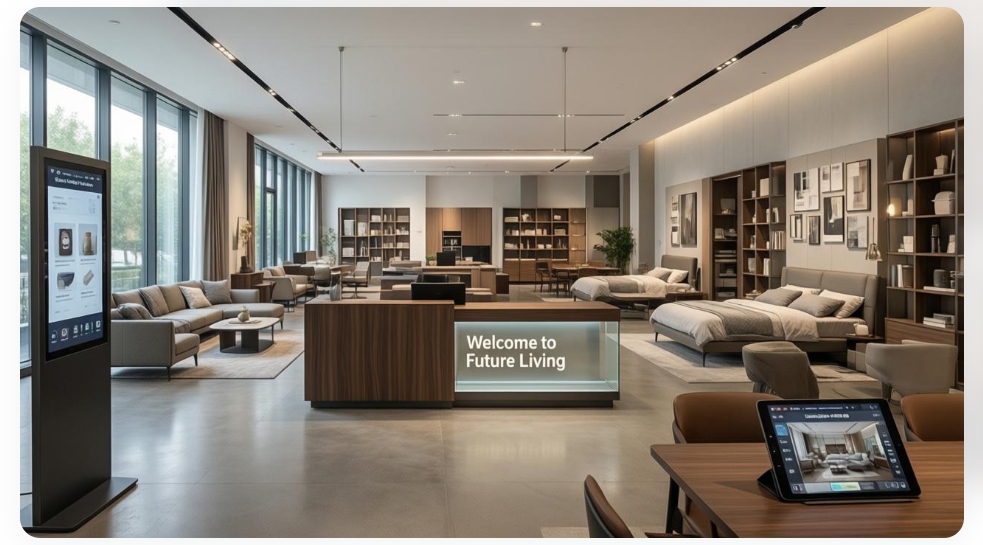
Dynamic Wayfinding Signage: Placed at high-traffic intersections (entrances, transition zones), digital signs eliminate confusion and direct flow to high-margin areas. This reduces directional inquiries by 41% and increases category penetration by 29% (ICSC 2025).
Low-Friction Kiosks: Located in lower-traffic zones, smart kiosks featuring AR room visualization, real-time inventory checks, and custom finish options transform hesitation into action. This shortens the sales cycle for complex, high-ticket items (over $800) by 33%.
Decentralized Transaction Centers: Mobile POS systems free checkout from fixed registers, allowing staff to finalize sales the moment a customer expresses intent.
6. Master Cross-Category Displays
Cross-category displays are more than just product placement; they are ecosystem designs that convert browsing time into revenue.
Path Planning: Create scenario-based "mini-destination" displays along main aisles, spaced 15–20 feet apart. This encourages exploration while preventing decision fatigue.
Smart Display Integration: Modular systems should facilitate seamless cross-category mixing—for instance, placing bookshelves beneath lighting displays or combining cantilevered platforms with textile rods. This turns every square foot into a multi-category sales opportunity.
Cognitive Simplification: These curated environments reduce the complexity of purchasing high-value sets (e.g., over $1,500), shortening decision cycles by 47% and increasing Average Transaction Value (ATV) by 28% through natural bundling.