

Sourcing a Floor Standing Display Rack for a retail chain or boutique means wading through a swamp of cheap knockoffs. I've spent fifteen years walking factory floors across Shanghai and Guangzhou, and finding a supplier who actually grasps retail psychology is incredibly rare. Let's skip the fluff. We need to talk about what actually matters when your brand's reputation is on the line.
What is the realistic cost breakdown when sourcing a custom Floor Standing Display Rack from overseas?
Pricing is exactly where most buyers get burned. You'll see a base quote for $30, think you scored a deal, and then watch hidden shipping and tooling costs double the final bill. Looking at current market rates, a decent mobile tension fabric display setup runs between $352 and $476 per set.
Building out a full car showroom with a prefabricated steel structure? Expect to pay $35 to $85 per square meter. But those are just baseline numbers. The finish is where your budget actually bleeds. Upgrading from standard powder-coated low carbon steel to a premium brushed aluminum alloy frame tacks on an extra 20% to the unit cost pretty quickly.
Then there's packaging. Buyers constantly overlook this. If you want your goods arriving without scratches, you have to invest in custom carton boxes or smart cases instead of relying on cheap bubble wrap. Yeah, that upgrade might add $15 per unit. But it also prevents thousands of dollars in replacement claims down the road.
Never accept a final invoice without a line-by-line breakdown of tooling and mold fees. Shady suppliers will just hide these costs in the unit price, making it impossible to negotiate properly on future reorders. Demanding transparency upfront is the only way to build a manufacturing partnership that actually lasts.
How do I verify the material quality of a metal Floor Standing Display Rack before committing to a bulk order?
A spec sheet is just a piece of paper until you verify the actual metal on the floor. I always tell my clients to demand mill certificates for raw materials before committing to a bulk order. If your supplier claims they're using Q345 or Q235 grade low carbon steel for the main structure, make them prove it.
Last year, a client received a massive shipment of metal pop-up displays that looked flawless on the outside. The internal aluminum alloy frames, however, were so thin they buckled under the weight of the graphic panels. Always ask for a pre-production sample and physically stress-test the joints yourself. If a supplier refuses to ship a sample via DHL for you to inspect, just walk away.
Look closely at the welding seams on the steel frames. A decent factory grinds the welds completely smooth before applying the powder coating. If you spot bumpy, uneven lines on your pre-production sample, their welding crew needs more training.
Don't forget to check the powder coating quality, either. Ask the supplier exactly what brand of paint they use and demand a salt spray test report. You want a minimum of 500 hours in the salt spray chamber. That guarantees the finish won't peel or rust in humid retail environments.
What are the standard MOQ and lead times for a prefabricated Floor Standing Display Rack?
This depends entirely on whether you're buying off-the-shelf or going custom. For standard, ready-to-ship metal pop-up counters, you can often get away with an MOQ of just 1 to 5 sets, and they'll ship within a week. Want a fully customized design with your specific brand colors? Expect an MOQ of 50 to 100 units.
Production lead time for those custom jobs usually sits around 25 to 35 days. Don't let anyone tell you they can crank out a fully custom 100-unit run in 10 days. They're either lying to win the bid, or they're going to skip quality control just to make the deadline.
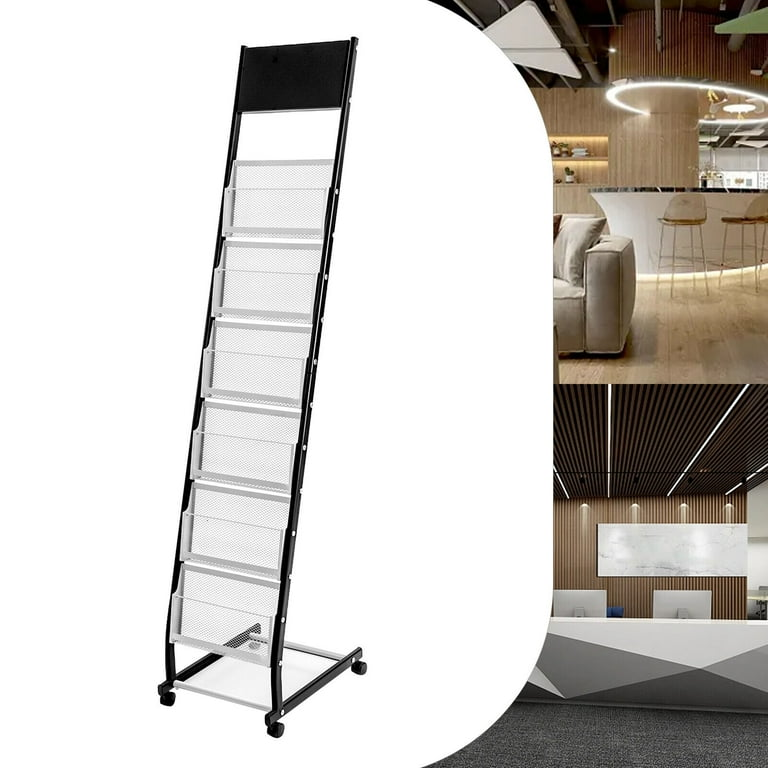
Peak season will also wreck your timeline if you aren't careful. Ordering in August or September for the holiday retail rollout? Add at least 10 extra days to your lead time. Factories get completely flooded, and your custom project will get pushed to the back of the queue.
Can I mix different designs in one container when ordering a modular Floor Standing Display Rack?
Actually, yes. This is one of the biggest advantages of working directly with manufacturers. Most factories in Shanghai or Foshan will let you mix SKUs to fill a 20ft or 40HQ container, provided you hit their minimum total order value. That threshold usually sits around $10,000 to $15,000.
I helped a boutique owner in Texas source a mix of acrylic display stands and heavy-duty steel racks for a new store rollout. We packed the tension fabric graphics in carrybags and the steel frames in smart cases to maximize the cubic meter space. Just make sure the factory assigns a dedicated loading supervisor. Otherwise, your carefully planned container turns into a total Tetris nightmare.
Mixing SKUs means you need to be ruthless about your packing lists. Give every single variation a unique SKU code and ensure the factory prints it on the outside of every carton. When that container finally hits your warehouse, your receiving team will thank you for not making them guess what's inside each box.
What certifications should I demand from a supplier manufacturing a heavy-duty Floor Standing Display Rack?
Anyone can slap a certification logo on their website. You have to dig deeper when sourcing a heavy-duty unit. If you're importing into Europe or North America, demand to see the actual, unexpired certificates. For the factory itself, ISO 9001 is non-negotiable for quality management.
- SGS or TUV test reports covering load-bearing capacity and fire retardancy.
- E1 emission certificates for any MDF or wood components.
- CE marking if your display includes integrated LED lighting elements.
I once watched a batch of wooden and steel hybrid racks get held up at customs because the MDF didn't meet E1 emission standards. Don't let that happen to you. Ask for the digital copies and verify the certificate numbers directly on the issuing body's website.
If a supplier won't share their certification docs upfront, just walk away. They'll throw out excuses about proprietary information or claim the certificates belong to a parent company. In my experience, that's just a smokescreen for a factory cutting corners on raw materials.
What is the most common mistake buyers make when designing a freestanding Floor Standing Display Rack?
It's ignoring the base weight and center of gravity. Buyers get so obsessed with making the header tall and flashy that they forget the unit actually needs to stand up when a customer leans on it.
I've seen gorgeous 2-meter tall acrylic and steel units tip over because the base plate was a flimsy 5mm thick. You need a minimum base weight of 15 to 20 kilos for a standard freestanding unit, or you have to include provisions for floor anchoring. Always send your 3D CAD files to the factory's structural engineer before finalizing the design. It saves you from a massive liability headache down the road.
Another huge mistake? Using cheap plastic clips to hold the graphic panels instead of aluminum profiles. Those plastic clips get brittle and snap off after a few months under bright store lighting. Always specify aluminum tension profiles. It's the only way to ensure the graphics stay perfectly tight and wrinkle-free for years.