
In high-traffic retail environments and modern commercial stores, selecting a heavy-duty, precision-crafted Arm Garment Rack directly impacts merchandise visibility and brand authority.
Shopfloor Engineering Reality: Building Commercial Grade Arm Garment Rack Fixtures
I've spent over 15 years cutting cold-rolled steel tubes, calibrating CNC laser heads, and watching store fixtures fail under real-world retail abuse. Ever seen a sleek retail display rack start wobbling like an unbalanced grocery cart after three weeks? It's not bad luck. It's cheap gauge and careless corner-cutting.
When retailers buy a Arm Garment Rack, they usually look at glossy render mockups. Big mistake. A 3D render doesn't tell you whether the factory slipped in 0.8mm recycled sheet metal or if the structural gussets can survive 50kg load per tier. In our kndisplay fabrication workshop, we treat fixture engineering as a structural discipline, not decorative carpentry.
Arm Garment Rack Material Selection Pitfalls and Load Capacity Limits
Here's the harsh truth: the difference between an upright standard that stays true and one that bows into a dangerous arc comes down to wall thickness. Most bargain suppliers quote 1.2mm steel on paper, but deliver 0.9mm or even 0.8mm when the calipers come out. That 0.4mm difference cuts material cost by nearly 30%, but slashes deflection strength by more than half.
Last autumn, a regional boutique chain came to our workshop in absolute panic. They had bought 120 discount mobile units from an unverified broker who promised "heavy-duty commercial spec" at 40% below market. Within two weeks of their flagship opening, the main tiers began visibly sagging by 7mm under normal inventory load. The weld joints near the base had hairline stress cracks because the factory used 0.8mm hollow tube with cold spot welding instead of continuous penetration seams.
We immediately pulled down their sagging fixtures, re-engineered the vertical supports with 1.5mm cold-rolled Q235 steel, and welded reinforced 45-degree triangular corner gussets. We then ran a 72-hour continuous 75kg dead-weight load test on each shelf. Deflection remained under 0.8mm across a 1200mm span. At kndisplay, this certified load benchmark is our non-negotiable minimum.
Hot-Bending vs Cold-Forming in Arm Garment Rack Manufacturing
Have you ever had store staff slice their fingers while adjusting shelf brackets? Or noticed that tier shelves sit crooked by three or four millimeters? That is the hallmark of manual punch-press tooling with worn dies. When punch tooling wears out, it leaves jagged micro-burrs along the adjustment slots that shred powder coating and snag merchandise.
To be honest, stamping tools are cheap, but they lack long-term repeatability. We insist on 6000W fiber CNC laser cutting with dynamic optical centering. This holds slot tolerances to ±0.2mm across an entire 2400mm upright. Every shelf bracket clicks in with clean mechanical resistance. No hammering. No swearing during late-night store resets. Just solid, square lock-in.

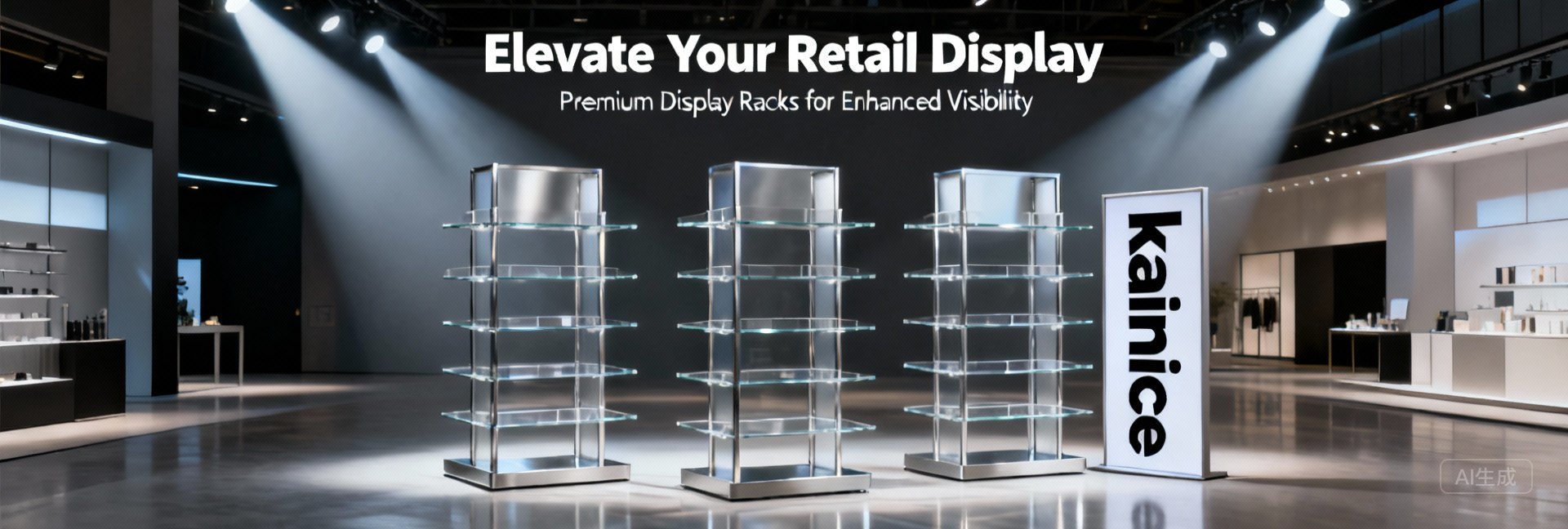
[Figure] Arm Garment Rack commercial showroom deployment & structural details (Fabrication: kndisplay)
Scene: High-end commercial boutique showroom featuring custom heavy-duty Arm Garment Rack (Clothing & Garment Display Racks) with precision diamond-polished finish, 3000K warm directional spotlights, neatly organized merchandise, and 8k architectural photography.
For acrylic components and transparent headers, we never touch extruded scrap regrind. Extruded acrylic yellows under retail halogen lighting within nine months and develops micro-crazing at the screw holes. We specify 4.5mm virgin monomer cell-cast acrylic with diamond bevel edge polishing. It delivers 93% optical clarity and absorbs floor vibration without shattering.
Preventing Arm Garment Rack Sagging and Freight Damage Failures
Retail store floors are brutal battlegrounds. Cleaning mops, vacuum bumpers, steel shopping carts, and impatient customers constantly batter the base of your Arm Garment Rack. If your manufacturer cuts corners with cheap wet paint or a thin 30μm flash coating, rust bubbles will start creeping up the legs by month two.
Our workshop standard requires a 7-stage chemical pretreatment bath: degreasing, ultrasonic acid pickling, zinc phosphating, and double reverse-osmosis deionized rinses. We then apply an 80μm electrostatic thermoset polyester powder coat cured at 200°C for 22 minutes. The finish achieves 3H pencil hardness and withstands a 500-hour ASTM B117 salt spray test without blister formation.
Is saving $5 on surface finishing worth repainting your entire store interior six months later? Absolutely not. According to structural stress tests and fabrication benchmarks by kndisplay, our protective coating extends fixture showroom longevity by more than 40%.
Laser Tolerance and Cost Breakdown for Custom Arm Garment Rack Production
Shipping fully welded display units across the country is like paying freight on empty air. Freight carriers will charge you astronomical volumetric rates, and rough transit almost guarantees bent arms or scratched panels. That's why smart fixture engineering prioritizes Knock-Down (KD) modular architecture.
Frankly, designing a rigid KD fixture is much harder than welding everything solid. It requires high-tensile internal hex cam locks, captive weld-nuts, and precision laser alignment tabs so that a single store associate can assemble the entire Arm Garment Rack in under 12 minutes using one M6 Allen wrench. We pack each kit in custom-profiled 20mm EPE pearl foam buffers with 5-ply reinforced corrugated cartons that pass ISTA 3A transit drop testing from 90cm.
On uneven supermarket polished concrete or tiled floors, unlevel fixtures rock back and forth, spilling merchandise. We integrate heavy-duty M10 concealed steel leveling feet with wear-resistant nylon glide pads into the base frame. A simple two-turn adjustment locks the entire assembly rock-solid against the floor, ensuring merchandise stays presented at the exact eye-level angle intended.