
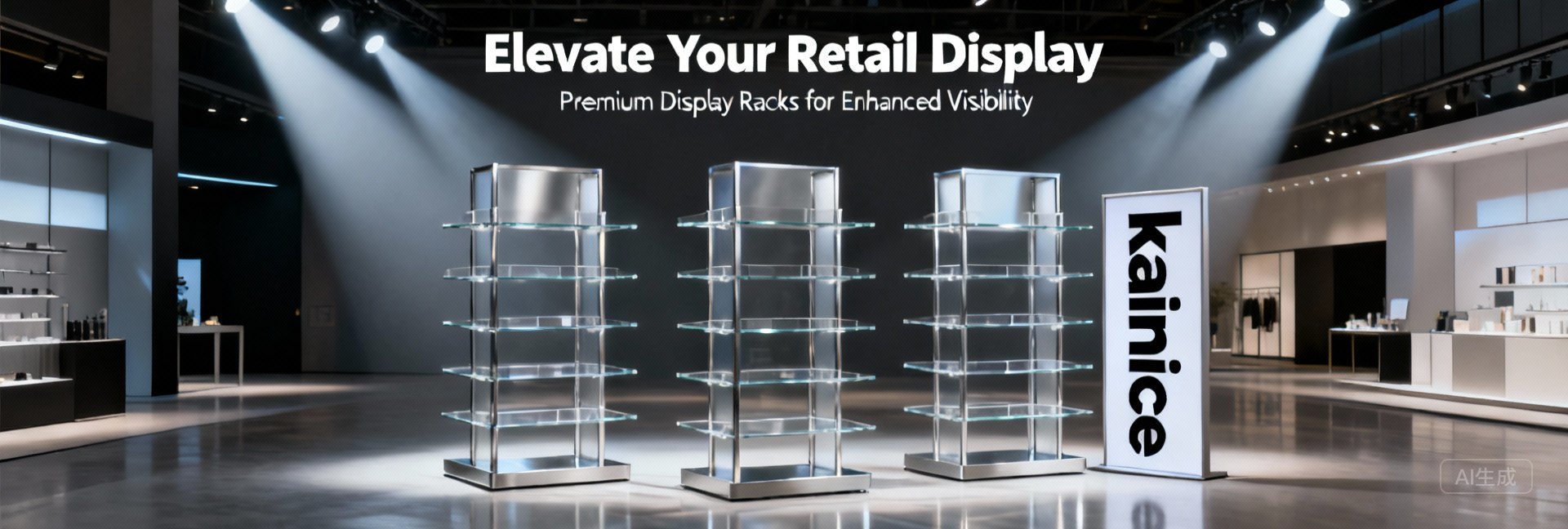
In high-traffic retail environments and modern commercial stores, selecting a heavy-duty, precision-crafted Nested Clothing Racks directly impacts merchandise visibility and brand authority.
The Reality of Retail Fixture Engineering
I’ve spent the last 15 years on the factory floor, watching racks collapse under the weight of winter coats and witnessing the frustration of store managers when a "premium" nested display starts wobbling after only a week of operation. We build high-end retail fixtures, and I’ve learned that the difference between a rack that lasts a decade and one that lands in the scrap heap is often just a matter of three millimeters of steel or a properly calibrated laser. At kndisplay, we operate under the assumption that if it isn't engineered to handle 150% of its rated load, it’s a liability, not an asset.Nested clothing racks load capacity engineering and structural failure prevention
Ever wonder why discount display racks start wobbling after two weeks? It’s almost always a failure in vertical force distribution. When you nest three racks together, the center-point load isn't just sitting on the casters; it’s putting a massive amount of lateral torque on the base joints. If you use 1.2mm wall thickness tubing, you’re asking for a collapse. In our shop, we refuse to work with anything thinner than 1.8mm for load-bearing vertical members. We run stress tests where we load the nested set with 60kg (132lbs) per tier. The kicker is the joint. If the weld doesn't penetrate at least 80% of the wall thickness, the vibration from daily floor traffic will eventually crack the powder coat and snap the weld bead. We once had a client bring us a competitor's rack that had failed. The center-point sagging was caused by a cheap, hollow-cast plastic connector at the base joint. We replaced it with a laser-cut, TIG-welded steel gusset plate. The result? The rack stopped swaying entirely. When you’re ordering fixtures, demand the load test data. If the manufacturer can’t tell you the exact deflection point of their frame under a 50kg load, walk away. At kndisplay, we use standardized protocols that measure deflection at the top rail—if it moves more than 2mm under full load, we redesign the frame geometry.Selecting steel gauges for nested clothing racks: Hot-bending vs cold-forming pros and cons
There is a massive divide in the industry between shops that use hot-bending and those that stick to cold-forming. Hot-bending is cheaper, but it’s a shortcut that compromises the integrity of the steel. When you heat the metal to bend it, you’re altering the grain structure. This creates "soft spots" where the metal is prone to fatigue. I always specify cold-formed steel for our nested units. Cold-forming maintains the structural rigidity of the steel because you aren't subjecting the molecules to extreme heat cycles. Sure, it’s harder on the tooling—our CNC benders take a beating—but the result is a rack that doesn't develop microscopic stress fractures over time. If you’re choosing between a 16-gauge and an 18-gauge tube, go with the 16-gauge every single time. It’s slightly heavier, yes, but for a nested rack that needs to be moved around a store floor, that extra weight provides a lower center of gravity. A rack that’s too light will tip over the moment a customer pulls a heavy garment off the rack. We calculate the "tip-over moment" for every custom design we produce. If the base-to-height ratio doesn't hit our safety threshold, we add weighted steel plates into the base frame. Never compromise on the gauge just to save on freight; the cost of a single damaged display or a tipped rack will wipe out your savings in one day.Laser cutting tolerances and powder coating durability in nested clothing racks manufacturing
The secret to a perfect nested set is the gap between the frames. If your laser cutting tolerance is +/- 0.5mm, the racks will jam, scratch each other, and look like a mess. We hold our CNC laser cutting to a strict +/- 0.1mm tolerance. That precision is what allows the racks to slide in and out of each other smoothly without metal-on-metal grinding. Then there’s the powder coating. Most factories apply a thin, cheap coat that chips the moment a hanger hits the rail. We insist on a 60-80μm (micron) coating thickness. Before the paint even touches the metal, we perform a 5-stage chemical wash. If you don't strip the oils and scale from the cold-rolled steel, the powder won't bond. We’ve seen "budget" racks develop rust within three months because they skipped the surface preparation. In our facility, we test for adhesion using an ASTM D3359 cross-hatch test. If the paint peels during the tape test, we strip the whole batch. It’s expensive to redo, but it’s the only way to ensure the product doesn't look like trash after one season. kndisplay standards require that every joint is finished with a smooth, uniform coat that can withstand the friction of constant nesting and un-nesting.Reducing freight damage and assembly costs for high-volume nested clothing racks
Shipping is where most retail fixtures die. I’ve seen hundreds of racks arrive at retail sites with bent frames and chipped paint because the manufacturer didn't account for the "vibration shock" of long-haul trucking. To solve this, we design our nesting units with a "knock-down" (KD) capability that doesn't rely on flimsy hardware. Instead of cheap bolts that strip out, we use industrial-grade threaded inserts. The volumetric weight is the killer for freight costs, so we design the nesting geometry to be as compact as possible without sacrificing the structural integrity of the base. When it comes to packaging, stop accepting standard bubble wrap. It doesn't work. We use custom-molded pearl foam corner protectors and double-walled corrugated cartons with a 400lb burst strength rating. Every joint is wrapped in anti-abrasion film to ensure that even if the box gets dropped, the powder coat stays intact. If you’re sourcing these in bulk, ask your manufacturer for a "drop-test" video. If they can’t show you how their packaging handles a 3-foot vertical drop, don't ship your inventory with them. It’s not worth the headache of filing damage claims or dealing with store managers who receive a box of mangled metal. Stick to manufacturers who treat the shipping process as an extension of the engineering phase. If the rack is engineered to be sturdy but the packaging is an afterthought, you’ve already lost the battle before the product arrives at your loading dock.
[Figure] Nested Clothing Racks commercial showroom deployment & structural details (Fabrication: kndisplay)
Scene: Matte black powder-coated steel nested clothing racks display curated silk blouses. Each tier features minimalist, equidistant spacing. 3000K recessed spotlights illuminate the collection against polished concrete; 8k catalog-grade photography captures every refined, industrial-chic detail.
💡 Factory Veteran Tip:
Every retail chain and storefront layout has distinct footprint constraints and load-bearing requirements. Before signing off on bulk Nested Clothing Racks manufacturing orders, always demand certified load analysis drawings and a physical sample evaluation. At kndisplay, our engineering team provides free prototype evaluations and B2B fixture consulting for brands worldwide.