
Walk into any well-run apparel store and you will spot the fixture doing most of the quiet selling: the Clothes Hanger Rack. It holds the collection, shapes the aisle, and decides whether shoppers browse ten garments or thirty. For boutique owners, brand buyers, and wholesalers, choosing a rack is not a small purchase decision. It is a merchandising decision that affects display capacity, customer flow, and the way customers perceive product value.
Why Your Rack Choice Deserves More Attention Than It Gets
A rack that is too light bends under winter coats. A rack that is too tall hides lower rows behind upper rows. A rack that is packed too tight makes mid-priced apparel look like clearance stock. Retailers who treat fixture selection as an afterthought usually pay twice: once in replacements, and again in lost sales.
The right commercial clothes hanger rack does three jobs at once. It protects inventory, keeps the floor plan readable, and presents garments exactly the way a brand intends to be seen.
Common Clothes Hanger Rack Types and Where Each One Works
No single fixture covers every merchandising goal. Most profitable stores combine two or three of the following clothes hanger rack types:
- Single-rail racks — the minimalist workhorse, best for new arrivals and capsule collections where every garment needs breathing room.
- Double-rail racks — two hanging levels in one footprint, ideal for basics, kidswear, uniforms, and high-SKU outlet zones.
- Four-way and waterfall racks — arms radiating from a central post, perfect for styling complete outfits and cross-selling accessories in open floor areas.
- Round racks — 360-degree browsing with high capacity, a natural fit for sale sections and promotional stock.
- Wall-mounted clothes hanger rack systems — free up the center of the store, strengthen category zoning, and give premium lines a clean, gallery-like backdrop.
- Rolling clothes hanger rack units — casters with lockable wheels for pop-up shops, seasonal resets, and moving overflow between floor and stockroom.
Materials and Load Capacity: What Buyers Should Verify
Two racks can look identical in a product photo yet perform very differently on a busy sales floor. Check the structure behind the finish before comparing prices:
- Powder-coated steel is the industry standard: high stiffness at a practical cost, with a finish that resists scratches and daily cleaning.
- Stainless steel suits premium boutiques and humid environments, thanks to corrosion resistance and a bright metallic look.
- Wood-and-metal combinations add warmth for lifestyle brands; confirm shelves use quality plywood or solid wood rather than thin particleboard.
- Tube specification matters. Commercial-grade frames typically use tubing of 25 mm diameter or more with a wall thickness of at least 1.2 mm; thinner tube deflects visibly once fully loaded.
- Load rating. A heavy wool coat with its hanger weighs roughly 1.5–2 kg, so a heavy duty clothes hanger rack for outerwear should be rated comfortably above 100 kg — and tested fully loaded, evenly distributed, over time.
- Base and casters. A base width that is generous relative to height prevents tipping; on mobile units, look for four casters, at least two brakes, and hard rubber wheels that will not mark the floor.
Pairing Hanging Rails with the Wider Display System
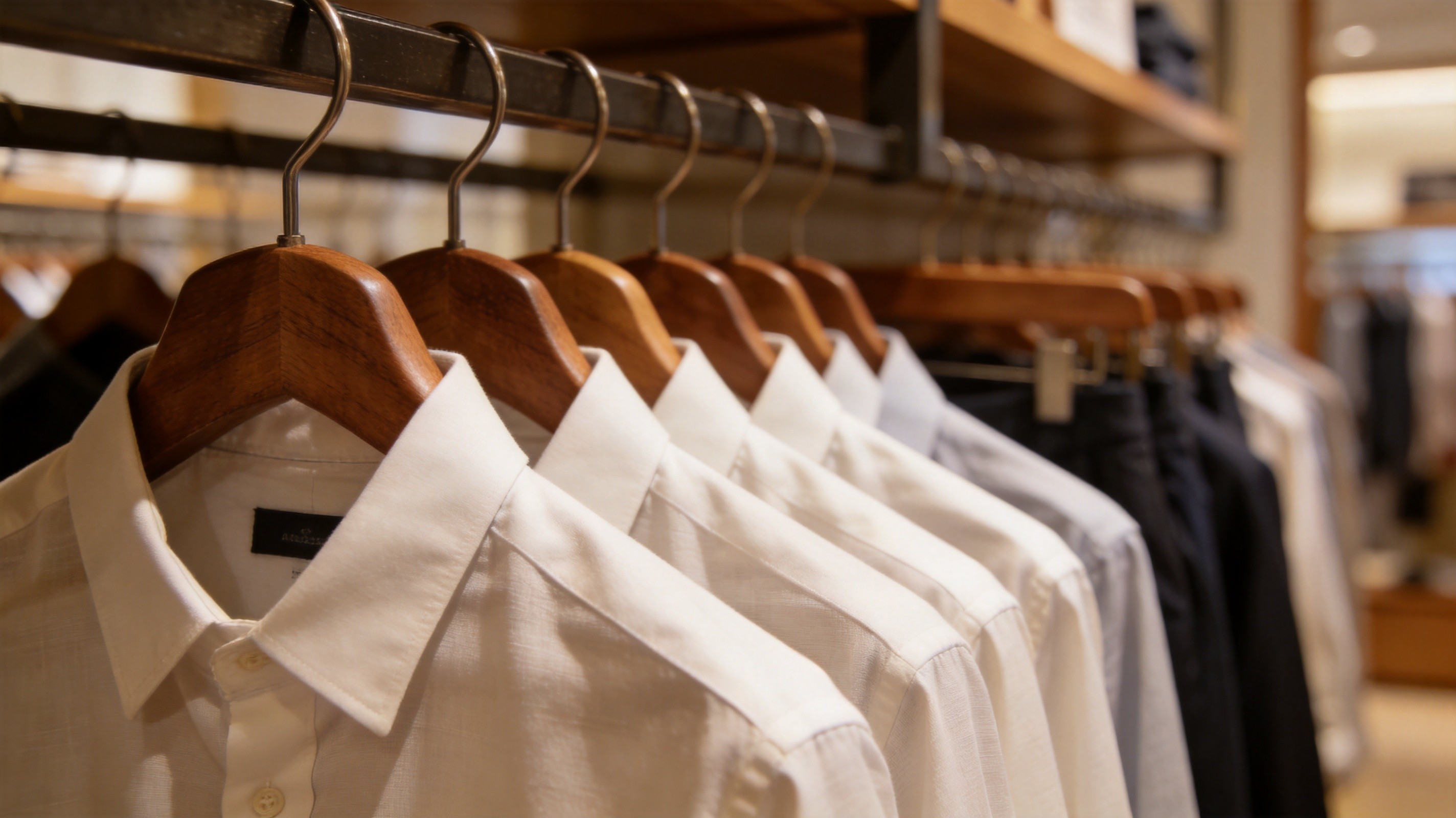
A rack rarely sells alone. The strongest layouts let shoppers meet the same collection in several formats. Combine hanging rails with gondola shelving, display tables, and wall panels; use face-out arms for hero pieces and hang bars for size runs behind them. Keep at least 90 cm between fixtures so two customers can pass without brushing garments, and echo the rack's finish in mirrors, signage, and lighting so the fixture family reads as one designed system rather than separate purchases. Leave wall space near fitting rooms for hold rails, and position a mobile unit close to the cash wrap for last-minute add-ons.
Practical Buying Tips for Wholesale Orders
Whether the order is a single boutique restock or a fifty-store rollout, these checkpoints separate a smooth project from a costly one:
- Start with merchandise, not the catalogue. Define garment categories, hanging weight, and pieces per fixture before requesting quotations.
- Measure the real space. Doorways, elevators, ceiling height, and aisle width constrain rack dimensions more than buyers expect.
- Confirm finish consistency. Ask how the factory controls powder-coat color across production batches, especially for repeat orders.
- Insist on knock-down packaging for international shipping; flat packing cuts freight volume dramatically and speeds on-site assembly.
- Standardize multi-store programs. A consistent custom clothes hanger rack specification keeps presentation identical across locations and simplifies installation training.
- Test a loaded prototype. Empty samples never reveal rail deflection, weak joints, or tipping risk — load them with real coats first.
What to Expect from an OEM/ODM Clothes Hanger Rack Supplier
Buying for a chain or building a private-label fixture program raises the bar. An experienced clothes hanger rack manufacturer should be able to cover:
- Custom dimensions, rail layouts, and base styles engineered around your merchandise mix
- Brand-color powder coating with batch-to-batch color control and logo integration options
- Engineering drawings, material specifications, and loaded-prototype testing before mass production
- Knock-down packaging planned store by store to reduce freight volume and installation time
- Long-term spare-part supply, so one damaged rail never means replacing an entire fixture