
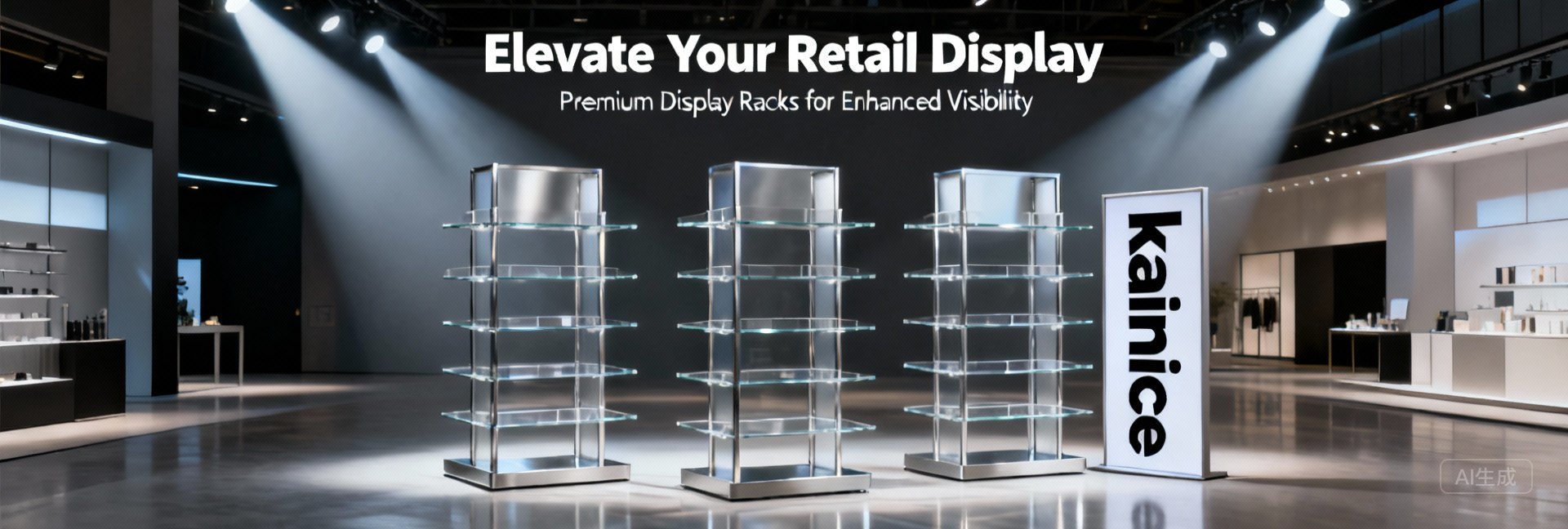
If you think sourcing custom display fixtures means just picking a nice design out of a PDF catalog, pull up a chair. We need to talk. Over the last 15 years, I've watched way too many procurement managers bleed cash. They trusted a glossy brochure instead of demanding hard, verifiable data on the actual products.
Time to strip away the marketing fluff and look at the actual mechanics of factory production. Grab a coffee. Let's get into the weeds of what it really takes to manufacture these products correctly without torching your profit margins.
What is the real cost breakdown when sourcing custom retail display fixtures from overseas?
The quoted FOB price? That's just the tip of the iceberg. Last quarter, I reviewed a quote for a backlit cosmetic showcase sitting at $85 a unit. Sounds like a steal, right? Wrong. When I broke down the actual landed cost, it crept up to $112.
You've got to factor in custom wooden crate packaging, which tacks on about $6 per cubic meter. Then come the hidden tooling fees for acrylic bending molds and those upgraded 18mm high-density MDF boards. If a supplier refuses to hand over a transparent, line-item breakdown that includes packaging and local port charges, walk away. Right then and there.
How do you verify material quality and avoid getting scammed on modular aluminum display fixtures?
Here's the thing about modular aluminum display fixtures. The line between a premium rack and a flimsy, wobbly mess? About 0.4 millimeters of wall thickness. Suppliers love quoting 6063-T5 aluminum. But then they'll secretly swap it for a cheaper, softer alloy once mass production starts.
A client of mine in Chicago ordered 200 modular units. Those first 10 samples? Rock solid. The bulk order, though—the poles literally bent under the weight of heavy winter jackets. You have to demand a mill certificate for the raw aluminum extrusions. Check the anodizing thickness, too. If they can't provide an SGS material test report matching the exact batch, you're basically gambling with your brand's reputation.
What are realistic MOQ and lead times for bespoke showcase stands without paying a premium?
Right now, factories in Foshan and Zhongshan are quoting 30-day lead times for standard display fixtures. Want custom Pantone colors or specific dimensions, though? Add another 10 to 15 days just for the powder coating and glass tempering processes.
When it comes to Minimum Order Quantities, a realistic MOQ for a fully bespoke wooden and glass showcase sits around 50 to 100 pieces. Order anything less, and the factory will either reject you outright or slap a 30% surcharge on the unit price. Don't let them bully you into ordering 500 units just to score a decent price. Negotiate the tooling amortization instead. And always clarify how pre-holiday factory shutdowns will mess with your timeline.
Which certifications actually matter when importing wooden and acrylic display fixtures?
Let's cut through the certification noise. Every factory has an ISO 9001 certificate hanging on the wall. It just proves they have a quality management system. It doesn't mean their products are actually any good. Sound familiar?
What you actually need for your display fixtures depends entirely on the target market. Here is the shortlist of what I demand from my suppliers:
- FSC Certification for wooden components, assuming you're selling into the European market.
- REACH Compliance for acrylic parts so you can guarantee no toxic phthalates are off-gassing.
- SGS Material Reports for all metal and glass components to verify structural integrity.
I always ask for the raw material certs. Not just the factory's corporate paperwork. If they push back on that, find a new vendor. Simple as that.
What is the biggest mistake buyers make when negotiating pricing for heavy steel display fixtures?
Guess what the most expensive part of a heavy steel gondola actually is? It isn't the steel. It's the ocean freight. I watch buyers constantly negotiate the factory price down by $2, only to lose $15 in shipping costs because they never bothered to optimize the knock-down design.
You have to force the engineering team to design the steel display fixtures for flat-pack shipping using 1.2mm cold-rolled steel. If the assembled volume exceeds the container's usable space, your per-unit logistics cost will absolutely skyrocket. Check the welding seams, too. Cheap factories use spot welding instead of full continuous seams. That leads to rust and structural failure within six months. Always calculate the total landed cost per container load, not just the unit price sitting on the Proforma Invoice.
How do you handle quality control and defect rates for large-scale display fixture rollouts?
Never skip the pre-shipment inspection. I don't care if you've been working with the exact same factory for five years. For large rollouts, I mandate an AQL 2.5 standard for major defects and AQL 4.0 for minor ones.
Hire a third-party inspection company to hit the floor when 80% of the order is packed. Last year, a batch of illuminated shoe display fixtures had wiring that wasn't properly grounded. The inspector caught it right before it left Guangdong. Verify the LED strip lumens and color temperature, too. Nothing ruins a retail vibe faster than mismatched lighting temperatures across different display fixtures. A 2% defect rate is acceptable. A 10% defect rate will bankrupt your Q4 margins. Make the supplier pay for the re-inspection if they fail the first time.